
)
When a century-old automotive brand decides to challenge Formula One racing, the focus naturally falls on performance itself. American luxury car brand Cadillac's first foray into Formula One allows us to delve into the aerodynamics and body engineering behind the Cadillac Formula 1 Team, witnessing this historic moment for the brand.
Monochrome test coating and aerodynamic considerations
The test livery was unveiled at Hudson's Detroit Building in Detroit, a cross-continental collaboration between General Motors' global design team and the Cadillac Formula 1 Team. The monochromatic design wasn't for subtlety, but rather based on actual testing requirements. F1 testing liveries typically conceal body details to prevent competitors from prematurely analyzing the aerodynamic structure. This is similar to the concept of camouflaging prototypes in the automotive industry, protecting key design elements in public.

The most striking visual element of the car is the reinterpreted Cadillac emblem and shield-shaped motif. The large emblem extends to the rear, subtly concealing the aerodynamic components. The body surface is covered with vertically arranged geometric patterns, using alternating glossy and matte finishes to create visual distractions under changing light. This design not only echoes the brand's DNA but also helps to blur the car's contours, making key aerodynamic areas less visible. The overall lines are clean, and the color blocks are controlled with restraint, presenting a highly technology-driven visual language.
Performance platform built for the 2026 season
The Barcelona Shakedown test week will be a crucial phase for the race car's first full-team testing. During the testing period, the engineering team will collect extensive data on aerodynamic balance, chassis stability, and cooling efficiency. The test livery is designed to maintain low visibility at high speeds and under photographic exposure, while retaining brand identification elements.

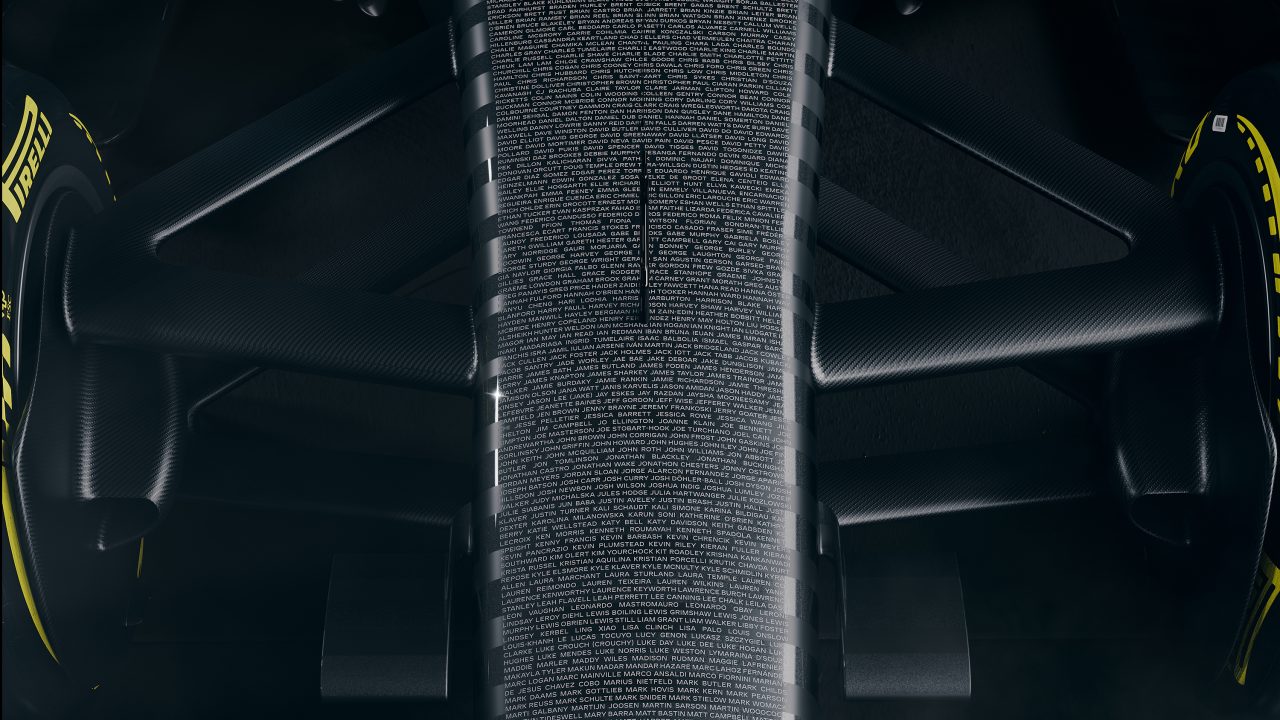
The Cadillac's proportions and streamlined design indicate that it prioritizes high-speed stability and precise handling. Clean body surfaces and sharp lines emphasize low drag, while the tapered and compact rear structure optimizes airflow. Visually simple, every curve is designed around downforce and airflow guidance. When this car truly takes to the track, the outside world will see more than just a brand logo; it will present a complete performance architecture.
