
Don Alfonso 1890 has been a well-known restaurant in Toronto for many years. Its executive chef Daniele Corona moved here from Italy five years ago and led the restaurant to win a Michelin star. In the multicultural environment of Toronto, he collaborated with different Asian chefs, drawing inspiration from them and devoting himself to researching the culinary combination with Japanese cuisine. Late last year, he brought his talents to DaNico as partner and executive chef. His signature menu focuses on his revered modern Italian culinary tradition, combined with a contemporary Asian twist, using the finest ingredients from Ontario and Japan.

Daniele Corona, Partner and Executive Chef at DaNico
DaNico opened in a historic landmark in Little Italy. The original bank building was renovated and has a strong Italian atmosphere from the interior decoration to the furnishings. Towering wooden doors, reclaimed from Italian country palaces, are surrounded by Versace tiles, while chandeliers illuminate the entrance, exuding a sense of mystery. As soon as you enter the interior, the steel column curtain comes into view. Its design is like an organ, and a giant wine cabinet is placed next to it, combining modern and simple style. Three large paintings hang in the dining area, and the printed smooth velvet chair backs bring a sense of nostalgia. The open kitchen features an imported Italian antique fireplace and the team of chefs hails from around the world, including Italy, France and Asia. The bank vault was changed to store wine, with a Medusa-shaped lamp placed in the center, whose reflection adds a mythological atmosphere to the space.

Hazelnut profiteroles, macarons and pistachio white chocolate cake
Italian cuisine meets Asian flavours
We tried the signature tasting menu this time and the appetizers gave us a pleasant start. The chef shapes the traditional Caprese salad into balls, wrapping it with tomato jelly on the outside and filling it with mozzarella cheese, sprinkled with shaved Parmesan cheese and basil, adding a playful visual touch. The wild duck breast from Ontario is marinated in orange juice, tender and juicy, served with chicory, star anise and cinnamon, and served with fennel puree.
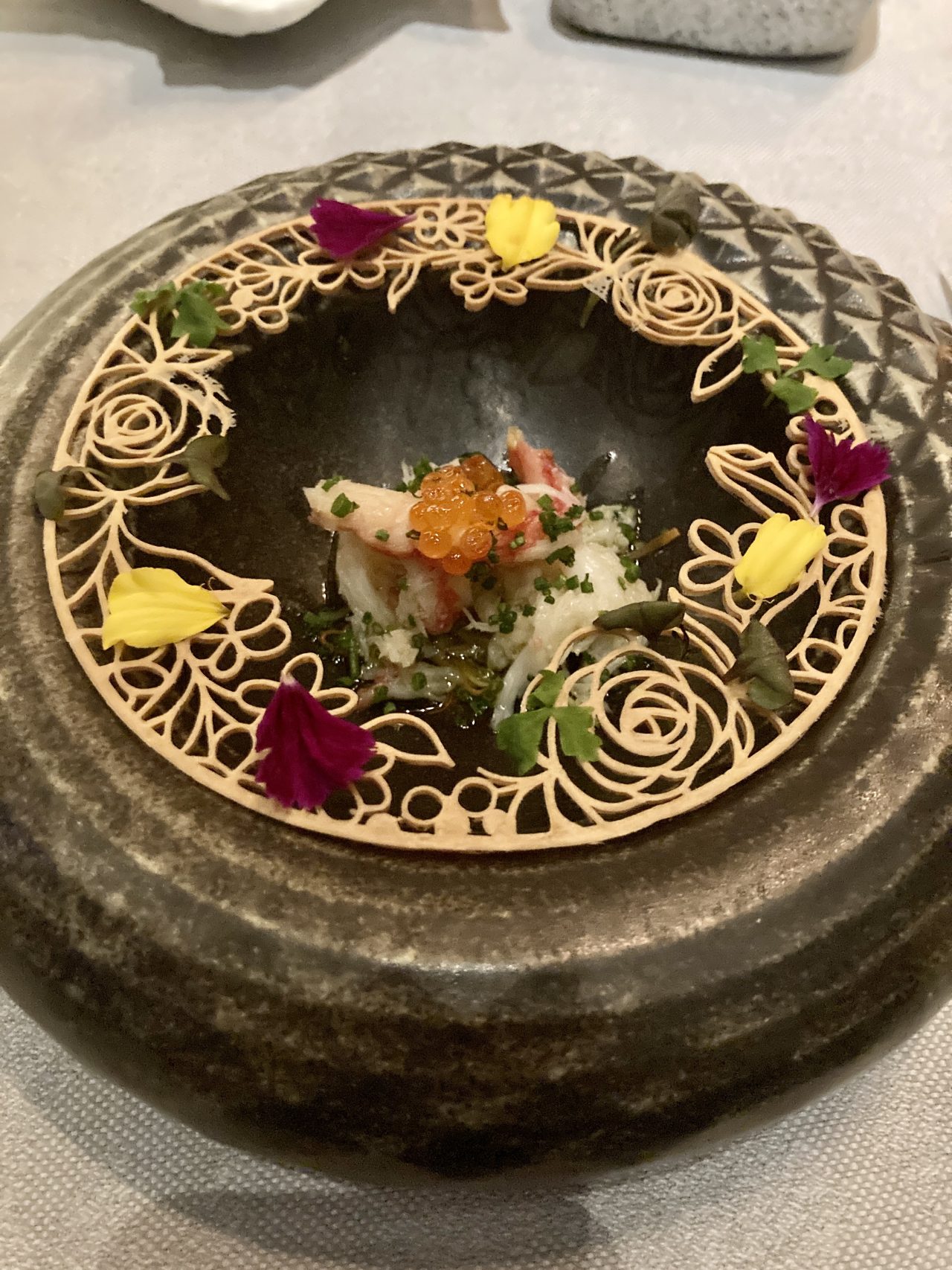
Mediterranean-style crab is framed by flower-shaped crackers, which is particularly exquisite
The Mediterranean-style crab is framed by homemade flower-shaped shortbread and paired with edible flowers, making it particularly exquisite. This dish features wild North Pacific crab, drizzled with Sicilian green olive sauce, and served with crisp seasonal vegetables and golden trout roe. Every bite is like a harmonious symphony where land and sea merge together.
The wide, flat pasta, Pastificio dei Campi, comes from Naples and is cooked with mushroom extract from Ontario. Aged for 24 months, the Parmesan cheese adds depth to the dish, while the fresh black truffles sprinkled on top further enhance the flavor. For the main course, the black cod was tender and seasoned with miso for a creamy texture. The fish is served with Swiss chard and Russian sturgeon roe, accompanied by matsutake mushrooms and drizzled with a smooth white wine sauce. The umami taste lingers in the mouth even after enjoying the last bite.
In the second half of the dinner, Asian flavors came into play. A juicy piece of Japanese A5 wagyu tenderloin, marinated for 12 hours and grilled over gentle charcoal. The waiter also brought out a mini Japanese grill, where Japanese bell peppers and Ontario pumpkin added a sweet flavor to the wagyu beef, creating a perfect balance of Japanese and Italian styles. Finally, a series of small desserts including hazelnut puffs, macarons and pistachio white chocolate cake were placed on a glass cover, like surreal works of art.

A5 Wagyu tender meat, served on a Japanese-style mini grill
Hometown kitchen becomes a source of inspiration
The head chef is from Naples in southern Italy and has over 20 years of cooking experience. He shared the origins of his culinary journey, saying that Italians have a very strong culture around food, and dinner is an important occasion for friends and family to get together and spend time together. “My mom always spent time in the kitchen preparing traditional Neapolitan dishes for us. I loved watching her cook and these are great memories I will never forget. Now when I try to create something new, I think back to her movements in the kitchen and it becomes my source of inspiration,” he recalls. He also draws inspiration from past experiences and techniques he has learned during his career. He admits that he is very picky about the combination of ingredients, always trying to find some interesting combinations and constantly working hard to improve them.

A playful ball of caprese salad, served with three appetizers
He also mentioned that the most famous dish in his hometown is the Neapolitan-style meat sauce, which takes six to seven hours to cook slowly. He said: "I remember that my mother and grandmother would get up early every weekend to prepare. When my brother and I woke up, the meat sauce had been cooking for two hours, and then we would pick up a piece of bread and dip it in some meat sauce. I saw that the meaning of cooking is about love, about family, and about life." He continued: "This is also the message I try to express in the restaurant, hoping to allow diners to participate more. In many dishes, I will serve a side dish on the side, or add different tableside services. We hope that diners can feel that this is not just a restaurant, but a place where we can share experiences and connect with us."

Black cod with matsutake mushrooms and a smooth white wine sauce
DaNico combines Asian flavors with Italian cuisine. Corona explained, "I like Asian culture and the chef shares my curiosity about Asian food. Asians, like Italians, are very passionate about food and value the source and quality of food. During my five years in Toronto, I have broadened my culinary horizons and become more international. I hope this restaurant can bring together Italian and Japanese cultures." In addition to adding Asian elements to the menu design, he also started with the ingredients, purchasing goods from the Japanese seafood market two days a week to ensure that they get the freshest ingredients. He believes that food is a common language. Even if diners do not speak Italian, they can still experience Italian culture through food. He hopes that people from different cultural backgrounds can understand the food he cooks.

Napolitan spaghetti topped with fresh black truffles
This concept of cultural fusion is perfectly reflected in DaNico. From menu design to ingredient selection, it contains Corona's unique understanding and emotional investment in food, culture and human feelings. This restaurant is more like a platform for cultural exchange, allowing guests to experience the customs and charm of different countries through food. What you taste here is not only delicious food, but also a resonance and warmth that transcends cultures.
