
Ferrari has officially unveiled its new model, the "Amalfi," a two-door, two-seat, front-mid-engine GT sports car named after the Amalfi Coast in southern Italy. As one of the brand's final internal combustion engine GT creations before its full-scale electrification rollout, the Amalfi embodies both the continuation of past classics and guidance for the future.
The car's color and curved surfaces breathe together.
The Amalfi adopts a restrained and pure style in its exterior design, a stark contrast to the brand's previous emphasis on aerodynamic tension and muscularity. The car features a long wheelbase, an exceptionally long hood, and a rearward-sloping cabin layout, showcasing authentic GT proportions. The side lines are extremely smooth, with a waistline extending from the headlights to the taillights, naturally blending into the downward-sloping rear end. The headlights are designed like a blade cutting through the night, narrow and concealed within the curved surfaces of the body panels, visually both sharp and understated. The overall design logic leans towards a combination of sculpture and craftsmanship, rather than a mere accumulation of styles.

Color is one of the core elements of this design. The first Amalfi to debut features a new turquoise blue called Verde Mistral. This paint reflects natural light and the car's curved surfaces, creating different levels of light and shadow. Instead of choosing common contemporary automotive colors like bright red, matte black, or electric finishes, the brand returns to an interpretation of the earth and nature, reminiscent of the Mediterranean shimmering on the Amalfi coast or the soft glow of dawn on the green mountains. Furthermore, the Amalfi is complemented by matte black side details and five-spoke polished wheels, resulting in an overall style that is understated yet highly recognizable in its elegance.
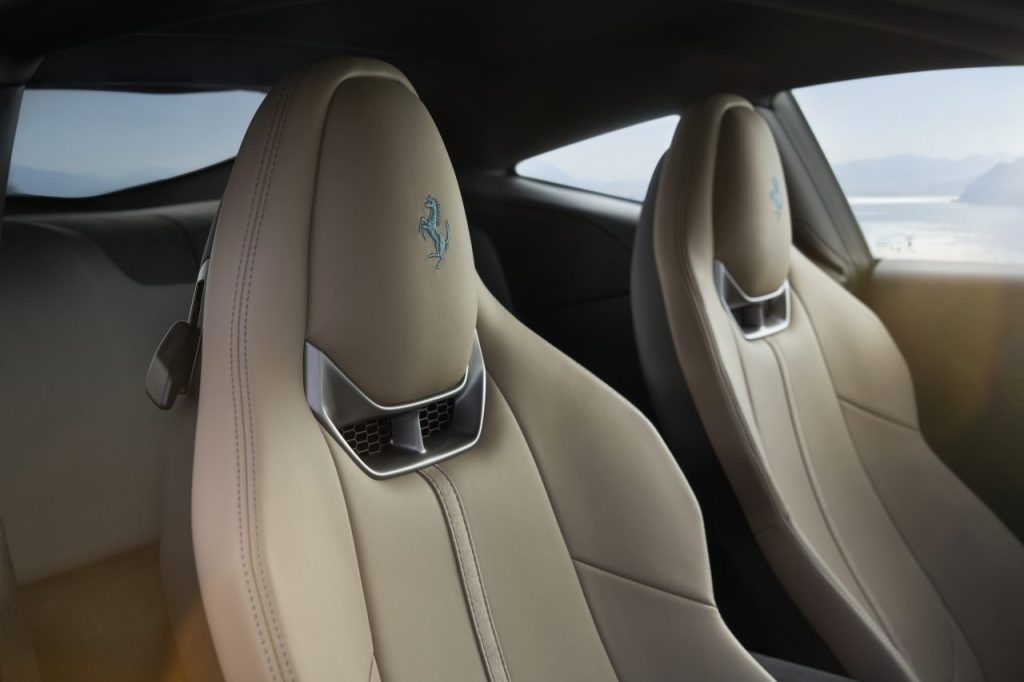
To echo the pure aesthetic of the exterior, the Amalfi's interior design eliminates the central multimedia screen, concentrating all driving information on the instrument cluster and steering wheel, allowing the driver to maintain focus on the road ahead. The passenger seat also features a dedicated display interface, enhancing the connection between the passenger and the driving rhythm. The extensive use of genuine leather, aluminum alloy, and carbon fiber achieves a perfect balance between luxury and sportiness in the cabin. The seats offer excellent support, and the armrests and center console layout are simple and clean. The cabin appears to be an extension of the car's lines, making the occupant feel instantly integrated with the vehicle.

Overall stability from mountain roads to highways
At a time when brands are transitioning to electrification and hybrid technology, Ferrari has chosen to retain the most traditional driving spirit in the Amalfi: a naturally aspirated 6.5-liter V12 engine positioned in the front-center position, producing over 830 horsepower with a redline of 9,500 rpm. This engine is also currently the highest-revving naturally aspirated power unit in Ferrari's production vehicles. Power is transmitted to the rear wheels via an eight-speed dual-clutch transmission. With an extremely lightweight design, the Amalfi can accelerate from 0 to 100 km/h in just 2.9 seconds and has a top speed exceeding 340 km/h.
Beyond the performance figures themselves, the brand emphasizes the Amalfi's driving feedback. The engine sound has been specially tuned, delivering a powerful and resonant roar at high revs while maintaining excellent sonic depth at low and mid-range speeds. The electronic power steering and new suspension geometry allow for effortless maneuverability during high-speed cruising and winding mountain roads. Ferrari has also incorporated extensive use of carbon fiber composites into the body structure to maintain rigidity while reducing weight. The new chassis system, combined with active aerodynamic components, automatically adjusts downforce and drag, ensuring the Amalfi maintains optimal stability and agility across various road conditions.
Ferrari officially unveiled its new model, the "Amalfi," a two-door, two-seat, front-mid-engine GT sports car, named after the Amalfi Coast in southern Italy. As one of the brand's final internal combustion engine GT creations before its full-scale electrification rollout, the Amalfi simultaneously embodies the continuation of past classics and guides future directions. The Amalfi's exterior design adopts a restrained and pure style, a stark contrast to the brand's previous emphasis on aerodynamic tension and muscularity. The car features a long wheelbase, an extremely long hood, and a rearward-shifted cabin layout, showcasing authentic GT proportions. The side lines are extremely smooth, with the waistline extending from the headlights to the taillights, naturally blending into the downward-sloping lines at the rear. The headlights are designed like a blade cutting through the night, narrow and concealed within the curved surfaces of the body panels, visually both sharp and understated. The overall design logic leans towards a combination of sculpture and craftsmanship, rather than a mere stacking of styles. Color is one of the core elements of this design. The first wave of Amalfi models features a color scheme called Verde……
