Pinglin leads the way, and boats on the Qingxi River.
The continent spits blue, and the water is soft.
In the middle of the lake, where the flower family lives, the bamboo shadows beside the road are secluded.
Mixiang can't bear to go back, after the sun sets on the west mountain.
"Wuhua Tianbao, Longguang shoots the market of Niudou; outstanding people, Xu Ru went to Chen Fan's couch. Xiongzhou Wuli, handsome stars." Wang Bo, a writer of the Tang Dynasty, described Hongdu's outstanding people and prosperity. Hongdu at that time is where Nanchang is now.
Nanchang, which was founded in 202 BC, is one of the first batch of national historical and cultural cities announced by the State Council of China, and traces of early human life here can be traced back to more than 5,000 years ago. In the torrent of urbanization in modern times, Nanchang also joined the army of development as a matter of course. With gorgeous labels such as the economic, cultural, and technological center of Jiangxi Province, the national aviation, optoelectronic industry base, and even a world-class photovoltaic industry base, etc., Nanchang seems to have gradually lost its humanistic temperament that has been carried by this city of outstanding people since ancient times. . What's more, a series of problems accompanying urbanization, such as air pollution, heat island effect, and urban waterlogging… silently threaten the health and daily life of urban residents.
 How to solve the potential environmental hazards brought about by urban development is also a nationwide proposition. It has taken China decades to become one of the fastest growing major economies in the world. Also due to accelerated development, the rise of urban agglomerations, and the hardening of urban underlying surfaces, only a small amount of rainwater can seep into the ground. Many cities across the country are facing various crises such as water shortages, water pollution, floods, and loss of aquatic habitats. On the other hand, the demand for water from residents and industrial production has increased sharply, and domestic and industrial pollution has exacerbated the shortage of water resources. Climate change on a global scale makes matters worse. In order to promote green cities and low-impact development, Yu Kongjian, a well-known design scholar, and his team began to focus on urban water systems in 1997. Around 2000, they introduced the concept of "sponge" as a metaphor for the natural system's ability to regulate floods. The extended "sponge city" is a new urban concept that builds flood and waterlogging prevention in the city, and also has ecological and environmental protection functions. Generally speaking, the sponge city has six major benefits: water storage, water seepage, stagnant water, water purification, water use, and drainage. It aims to organically combine modern green technology with various factors such as society, environment, and humanity.
The Nanchang Yuweizhou Wetland Park project, which won the 2022 AZ Awards Best Landscape Award, is the effort of Turen Design led by Yu Kongjian to build a sponge city. As one of the best architectural, landscape and interior design projects recognized all over the world, Yuweizhou Wetland Park’s original design not only improves the living environment of urban residents, but also provides people with escape and relaxation in the complicated urban life. The rest space rewrites the ecological function of the city and the relationship between man and nature. Turen's design team uses design to convey wisdom and aesthetics, creating a more comfortable living space for human beings.
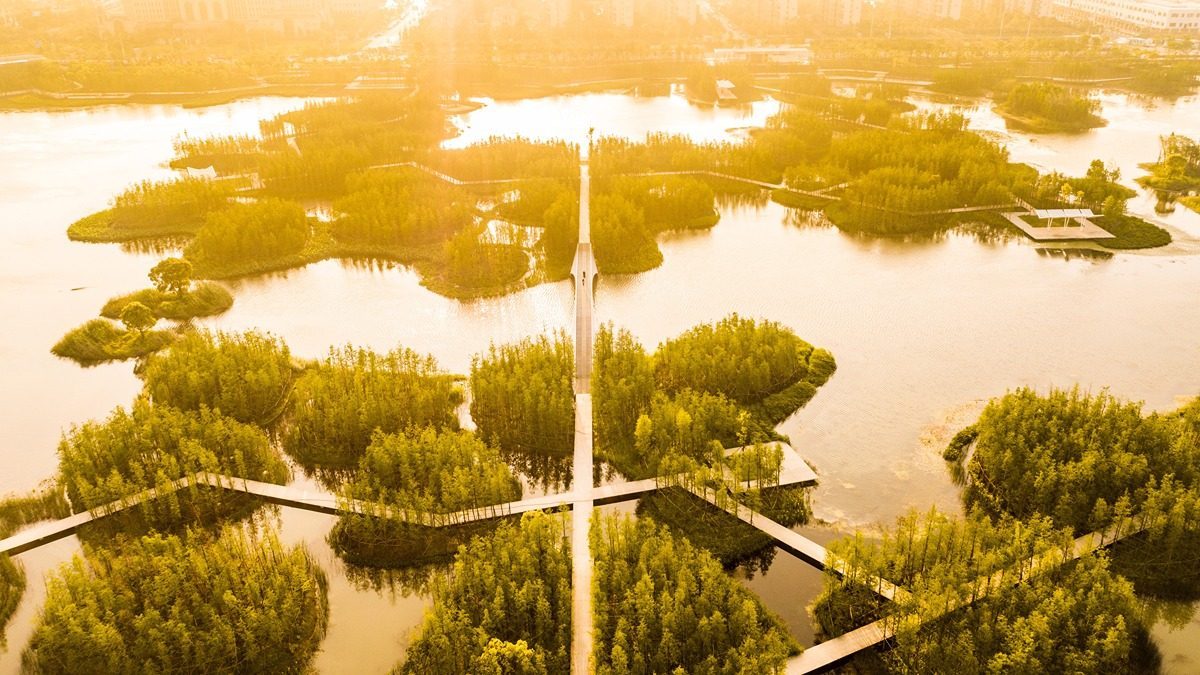
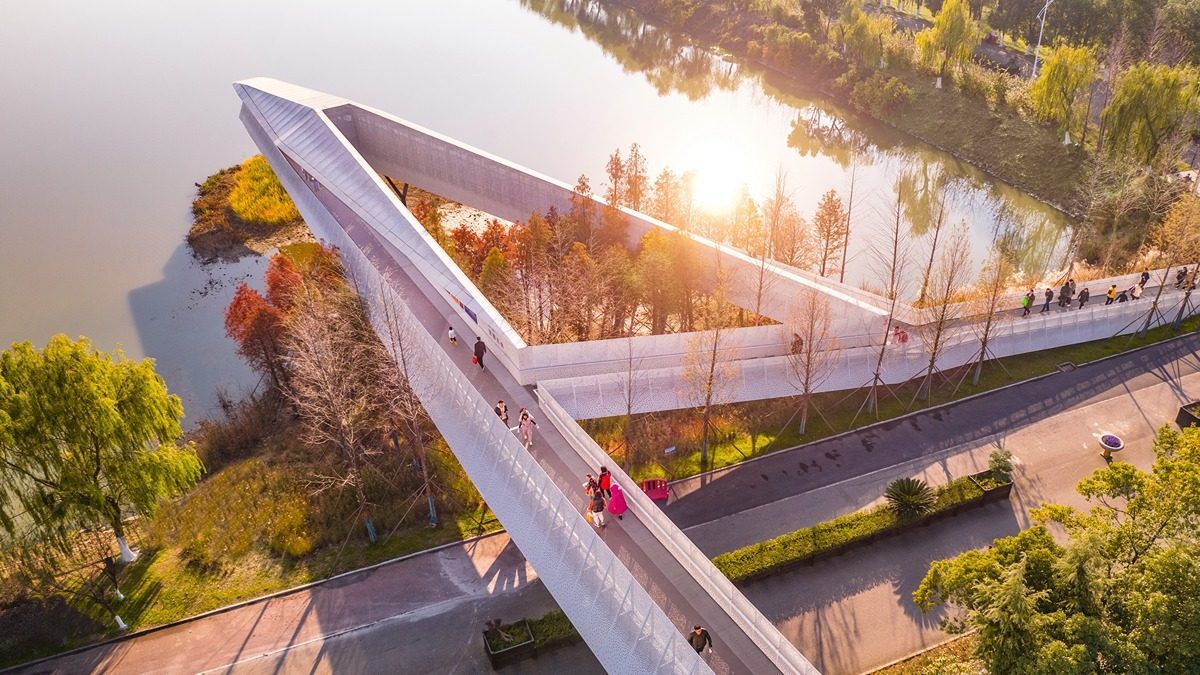 The original site plan was as a green corridor area for the migratory bird passage of Aixi Lake in Nanchang High-tech Zone. However, in the actual urban development process, it is occupied by scattered barren fish ponds and fly ash brownfields that block out the sky and the sun. The terrain is low-lying. , water quality is extremely poor, the water system is blocked, and there are serious multiple pollution problems. Based on this, Turen's design team proposed a restoration and reconstruction plan centered on water ecological restoration strategies.
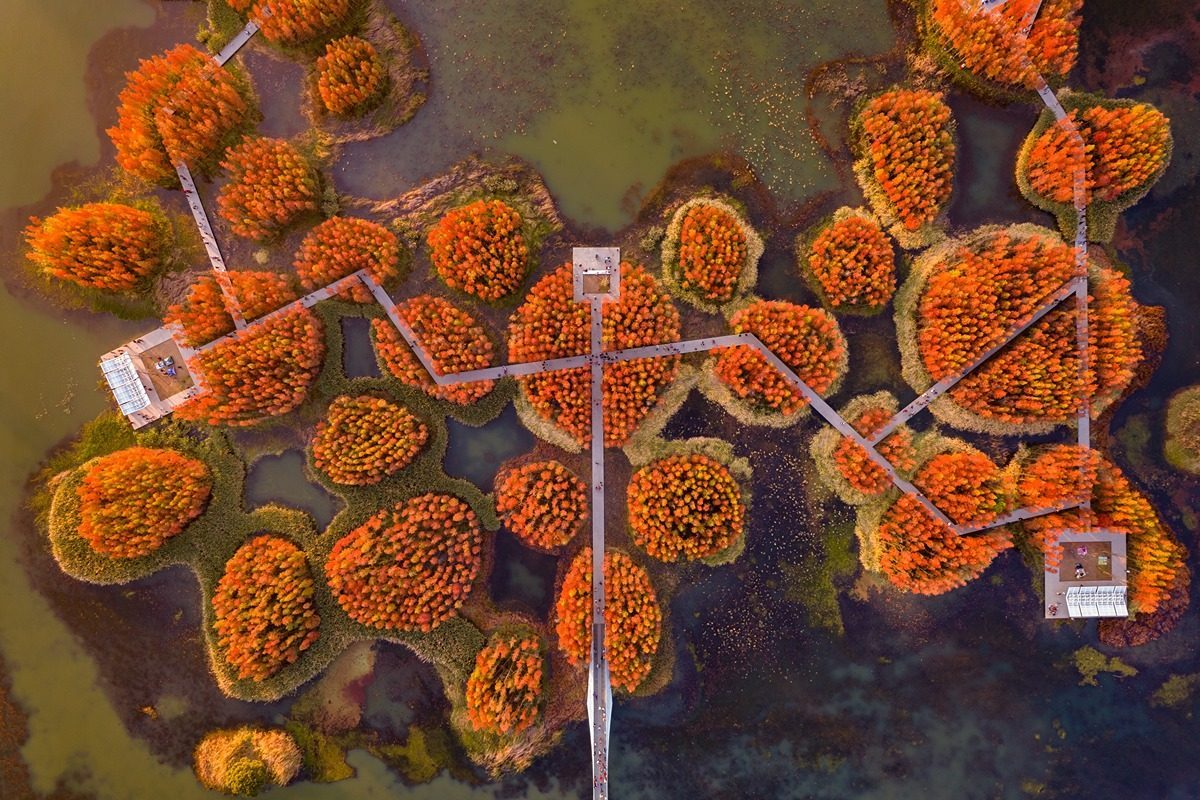
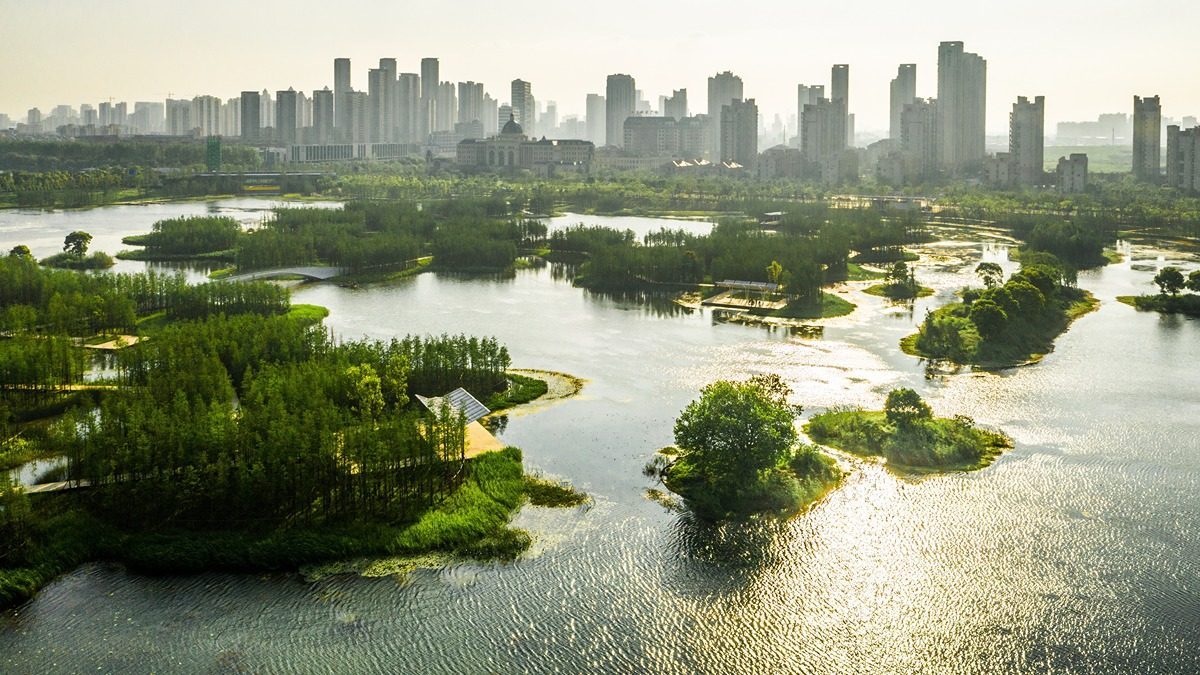
Yuweizhou Wetland Park takes the construction of a sponge city park as the core, and utilizes the basic resources of the site to build a floating forest that integrates the six benefits of a sponge city, including water storage, seepage, stagnant water, water purification, water use, and drainage. The design team was inspired by the concept of stacked fields cultivated on ancient swamps, simple digging and filling techniques, and floating garden systems. According to local conditions, the fly ash dumped on the site was recycled and mixed with the soil of the fish pond foundation. Many small islands were formed. It is also connected to the surrounding water system, and through the design of landfill, a lake landscape that can accommodate a water level rise of two meters and store 1 million cubic meters of floodwater is formed.
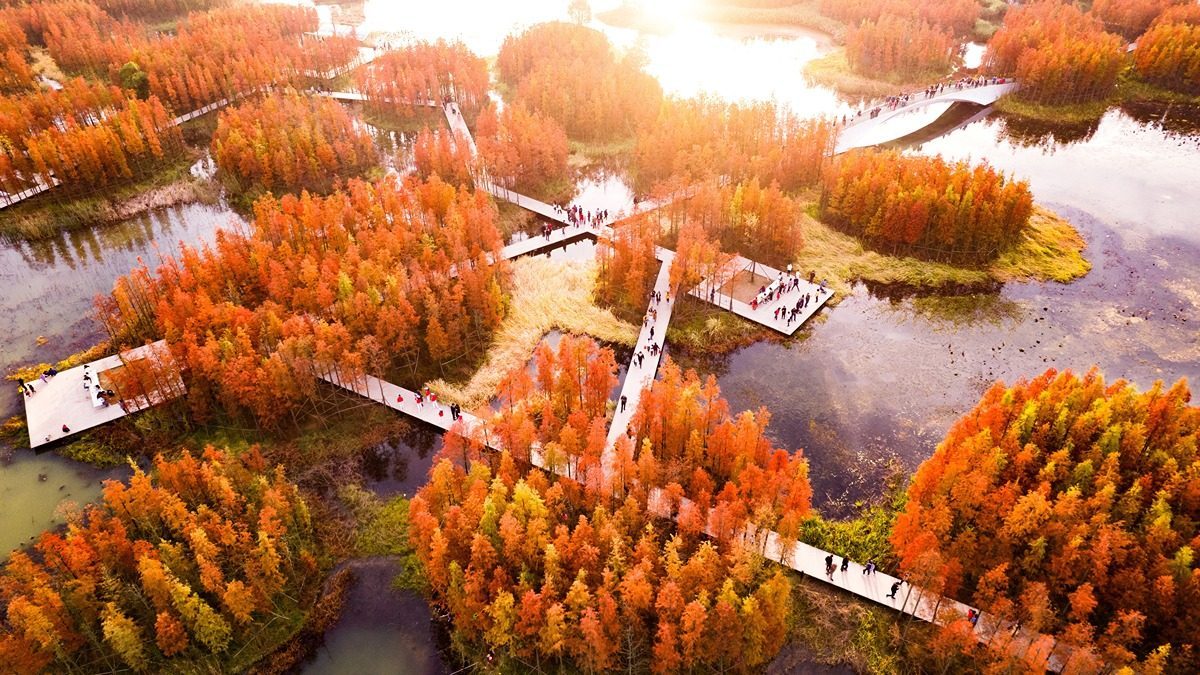
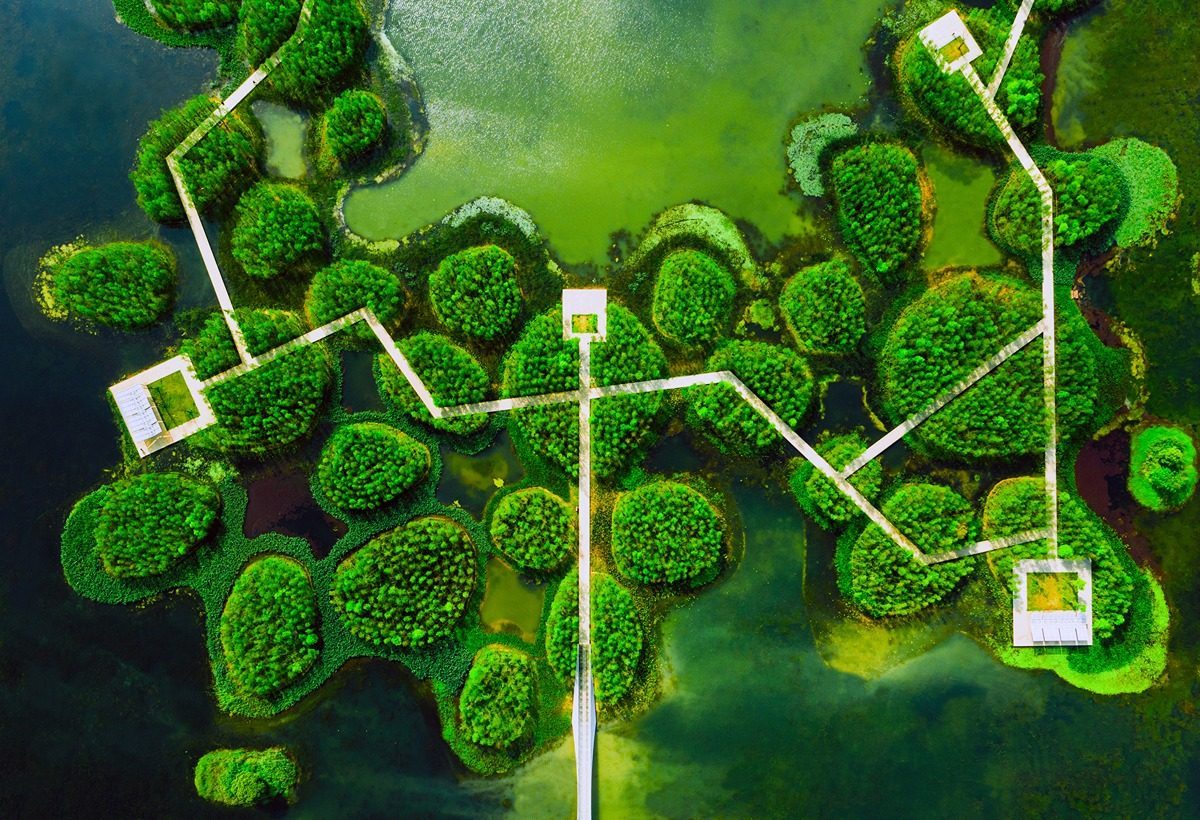
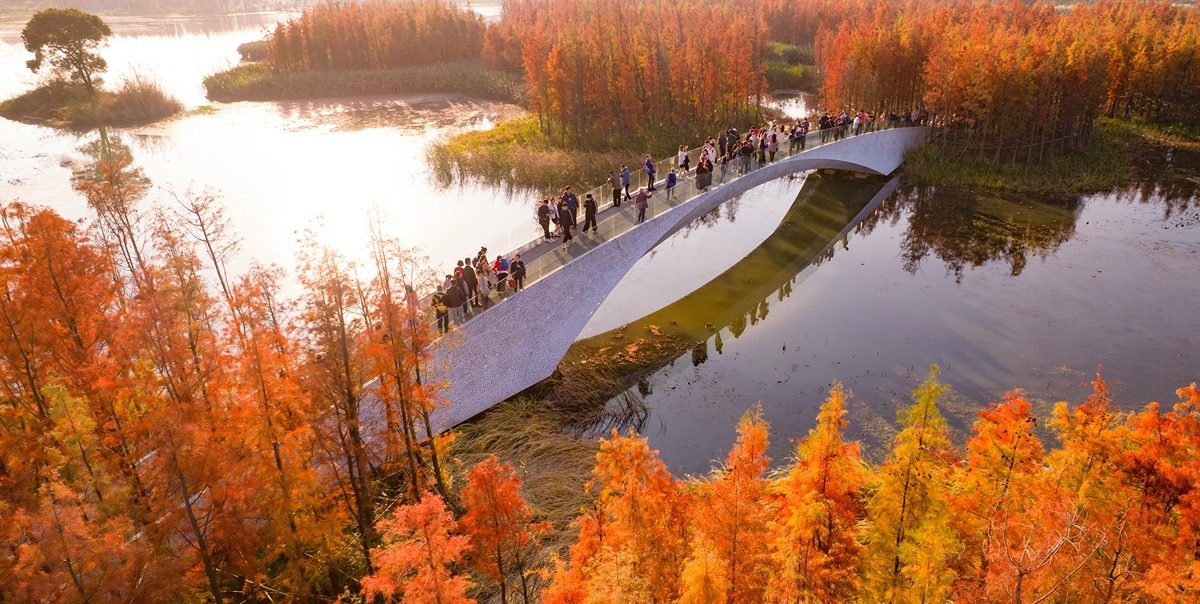 The floating forest in this city can not only adjust and store the rainwater flow of the upstream Aixi Lake during the rain and flood period, effectively alleviate some urban waterlogging, but also effectively store rainwater and feed back the purified rainwater to the city's water supply demand. The excess water will be discharged into the Ganjiang River through the Mingshan Canal, forming a sustainable ecological purification chain, effectively regulating the surrounding climate, and forming a "breathing" sponge city ecological park.
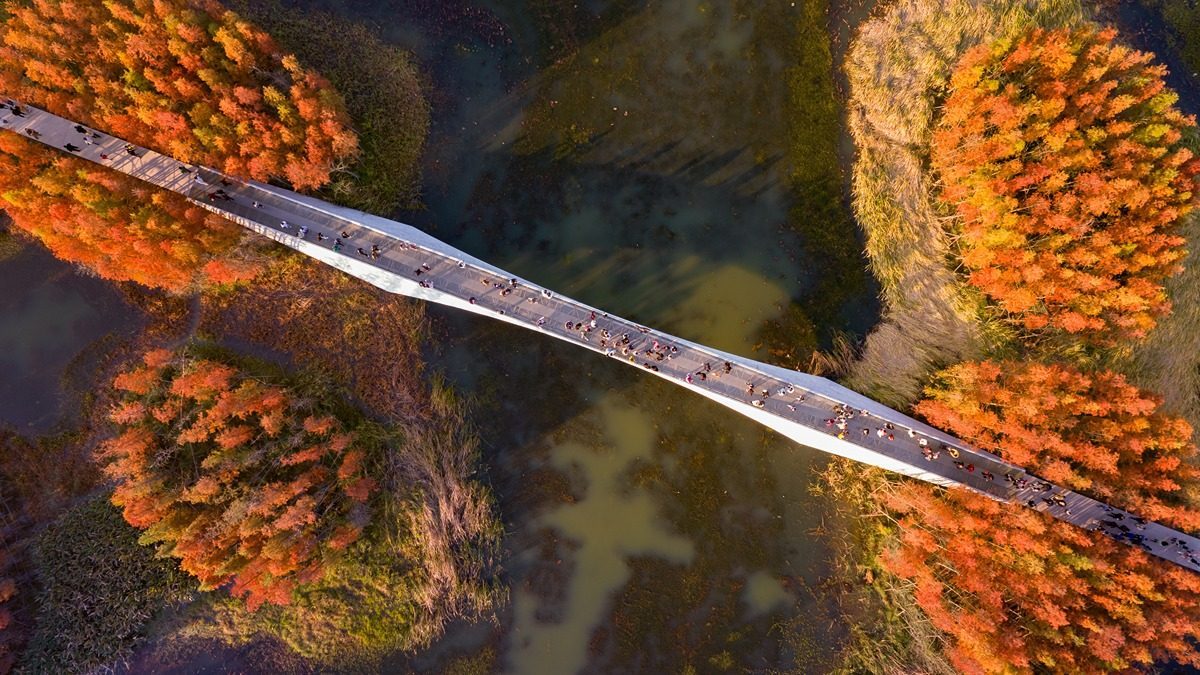
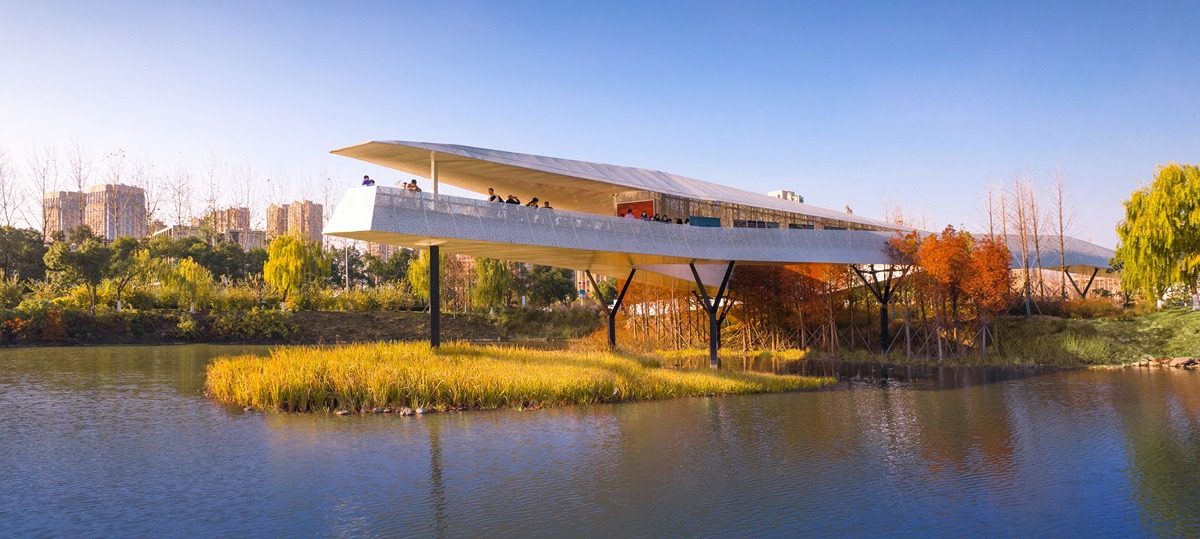
There are large areas of fish ponds and ridges in the central area of the original site. Turen Design made effective use of the existing conditions and transformed the field ridges into recreational facilities such as water trails and water oxygen bars. The surrounding areas of the site are equipped with circular bicycle paths and promenade paths, and are equipped with unique wind and rain corridors, fishtail pavilions, watchtowers, sports venues and restaurants, so that the entire park can provide comprehensive leisure functions and at the same time, every small Each region has its own focus and is interconnected.
In order to provide a habitat for migratory birds, the design team retained a large number of rice fields and designed a large area of tidal flats. The team planted a large area of maple and poplar forests to achieve noise reduction while creating landscaping, separating human activities from bird habitats. The designer introduced the concept of sponge city in an all-round way. No road is paved in the middle of the wetland to ensure that migratory birds will not be disturbed and realize the symbiosis between man and nature in a harmonious environment.