
In recent years, Tiffany & Co. has increasingly drawn inspiration from the 19th-century world of fantasy and playfulness in its high jewelry and Time Objects collections, particularly in its high jewelry and Time Objects collections. This year's "Paradise Bird Parrot Watch" and "Singing Bird on a Clock" both draw inspiration from Jean Schlumberger's classic Bird on a Rock brooch, reinterpreting birds, jewelry craftsmanship, and mechanical devices into two highly poetic pieces.
Paradise Bird Parrot Watch
A tropical garden condensed into the dial
The Paradise Parrot watch is part of the Blue Book 2026 Hidden Garden High Jewelry collection. The 8K white gold case is fully pavé-set with diamonds, paired with a deep blue alligator leather strap, and a brightly colored parrot perches at the center. The parrot itself is crafted in 18K yellow gold, set with diamonds, pink sapphires, turquoise, and onyx, with its feathers hand-painted. I really admire Tiffany's mastery of color. Even with blue, green, pink, and white gemstones all in one piece, the overall design maintains a sophisticated balance, rather than succumbing to a gaudy tropical vibe.


The dial itself is even more worthy of close examination. Craftsmen used multiple layers of hand-painted enamel to create the leaves and plant background, a process that took over 80 hours. A 2.5-carat chrysoprase stone floats above the dial at the center, with a magnifying lens structure behind it to create deeper green gradations as light passes through the gemstone.


Singing Bird on a Clock
18th Century Mechanical Romance
Compared to the glamorous tropical feel of the Parrot Watch, the Singing Bird Clock possesses a different, more classically charming atmosphere, reminiscent of the singing, moving mechanical dolls found in the collections of 18th-century European nobles. Indeed, the singing mechanical bird device originated in 18th-century European courts. When the button on the side of the clock's glass case is pressed, the bird begins to sing, flap its wings, open and close its beak, and sway in sync with the melody. The entire sound system is not electronic; rather, it produces genuine, bird-like sounds through bellows and tiny tubes.
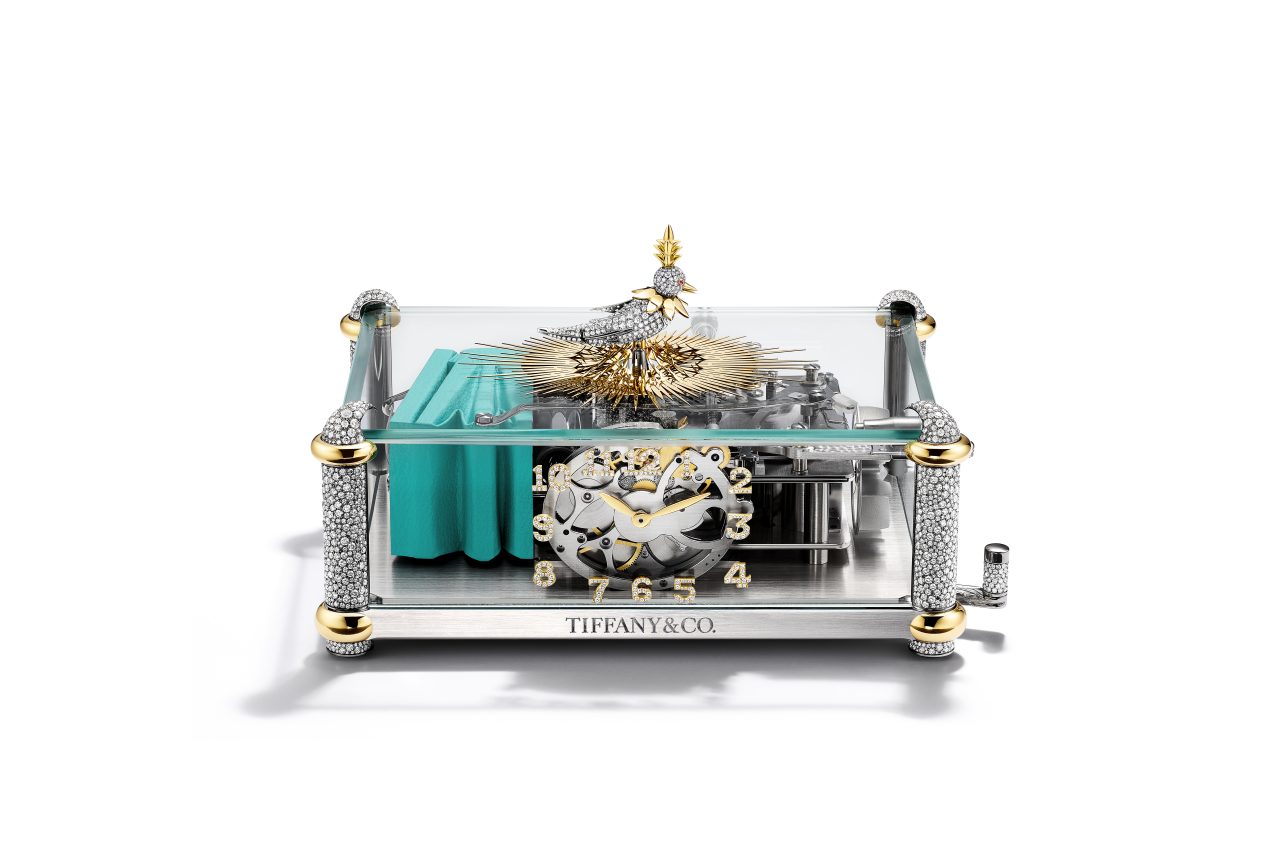
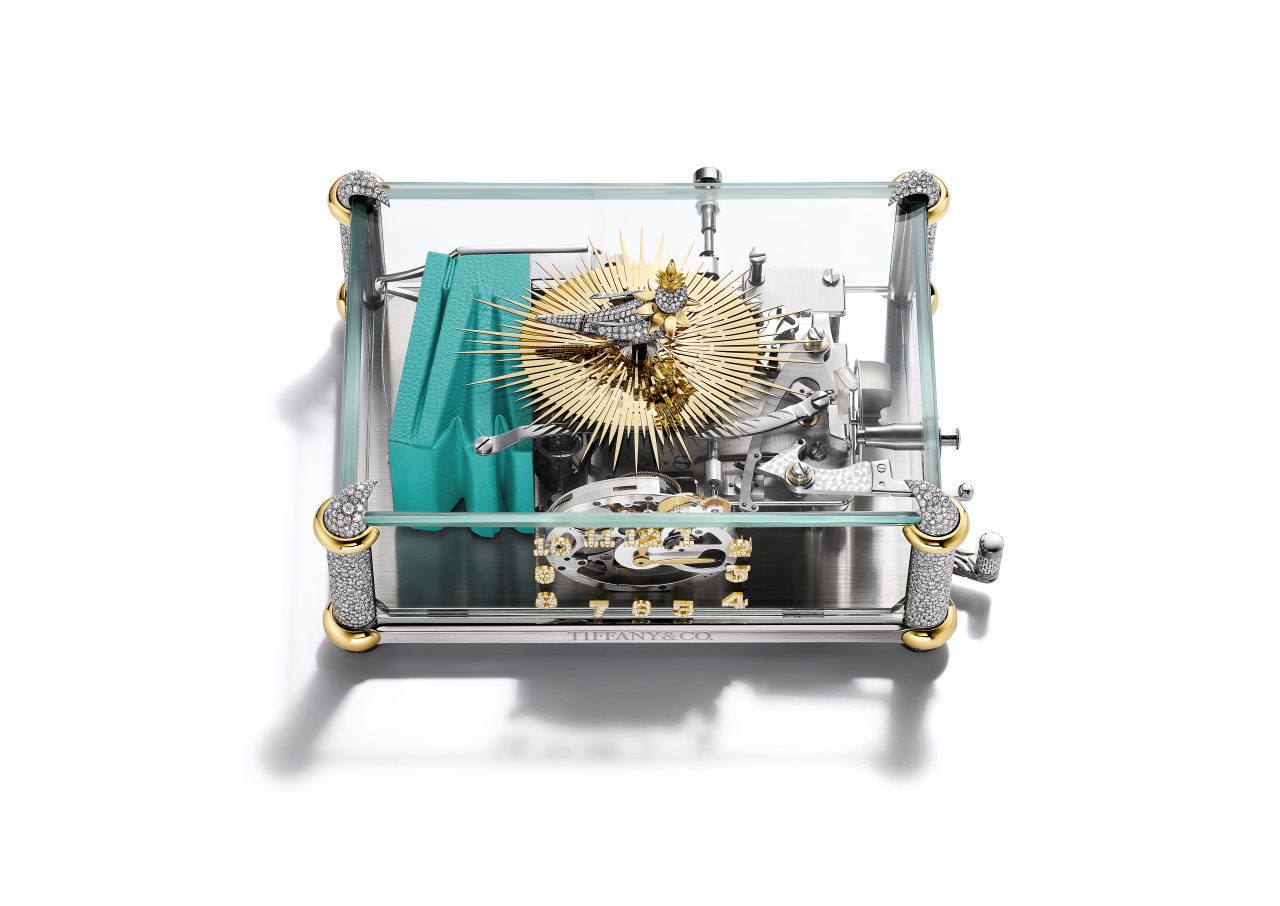
The entire piece exudes a strong classical mechanical feel. The transparent glass box fully exposes the internal pistons, bellows, and gears, and even the bellows structure covered in Tiffany Blue leather is clearly visible. The clock's automatic chiming at 5 p.m. every day is particularly special, and it is actually a tribute to the brand's flagship store on Fifth Avenue in New York.


The clock appears light and airy, but its craftsmanship is extremely complex. The bird, made of titanium and gold, consists of 28 parts, and its body and the glass clock are inlaid with more than 2,300 diamonds. However, what is truly captivating is not the number of gemstones, but rather the fact that the brand has rekindled an emotion rarely felt by modern people: the romance of being willing to spend time just to watch a mechanical bird sing for ten seconds.

The post "Where Time Begins to Sing" first appeared on Pure Luxury Magazine .
In recent years, Tiffany & Co. has increasingly drawn inspiration from the 19th-century world of fantasy and playfulness in its high jewelry and Time Objects collections, particularly in its "watching time" and high jewelry collections. This year's "Paradise Bird Parrot Watch" and "Singing Bird on a Clock" both feature Jean Schlumberger…
The post "Where Time Begins to Sing" first appeared on Pure Luxury Magazine .
")%]
In recent years, Tiffany & Co. has increasingly drawn inspiration from the 19th-century world of fantasy and playfulness in its high jewelry and Time Objects collections, particularly in its "Watching Time" series. This year's "Paradise Bird Parrot Watch" and "Singing Bird on a Clock" both feature Jean Schlumberger… The post Where Time Begins to Singing…
