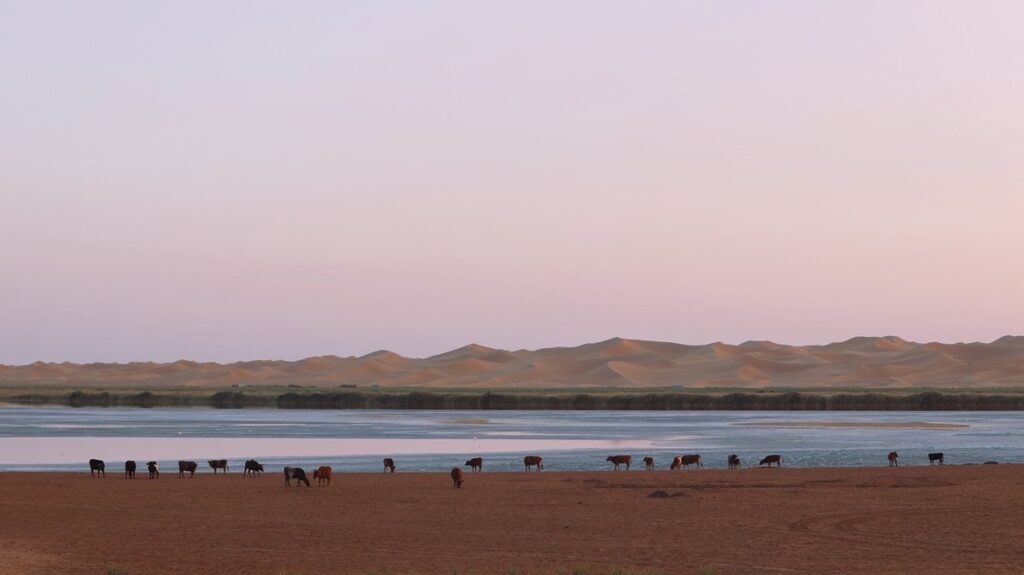
For most travelers, Yinchuan is a name that is rarely mentioned. This capital city of Ningxia Province is unremarkable in the busy northwest travel itinerary in summer. Many people just regard it as a stopping point, but they don't know that there are thousands of Western Xia royal tombs and ancient rock paintings hidden in this city, and it is also one of the best wine producing areas in China.
One evening in August, when I walked out of Yinchuan Railway Station with a big bag on my back, the temperature in the 20s and the cool breeze immediately made me feel more fond of this small town known as "Saibei Jiangnan".
Nights in Yinchuan belong to night markets and snacks. Huaiyuan Night Market is undoubtedly one of the best. Here, nearly a thousand stalls are arranged in an "L" shape on a street hundreds of meters long. Walking into the night market, the eyes are almost overwhelmed by the dazzling array of delicacies – roasted gluten, beef patties, spicy paste, sweet embryo milk tea, milk and egg fermented glutinous rice… There are so many Northwest snacks with regional characteristics that I have never heard of.
Local experiences are definitely an integral part of every trip. Food is undoubtedly an excellent entry point, and the night market is a master of the sense of life. Here, you can see big brothers of the Hui nationality who are barbecued, teenagers and girls who are laughing and playing, and office workers who are selling food on the way home… The bustling crowd is mixed with shouting, local dialects in Ningxia and the city's busy traffic. There is a Yinchuan with a smell of fireworks. I think, "living elsewhere" probably refers to this feeling.
Before coming to Ningxia, a local friend once joked: "There is nothing to see in the Western Xia Royal Tombs, just a few small mounds." But I couldn't resist my curiosity in the end, and I rented a car early the next morning. Navigate directly to the Tombs of the Xixia Kings, planning to visit this legendary land while the sun is not hot.
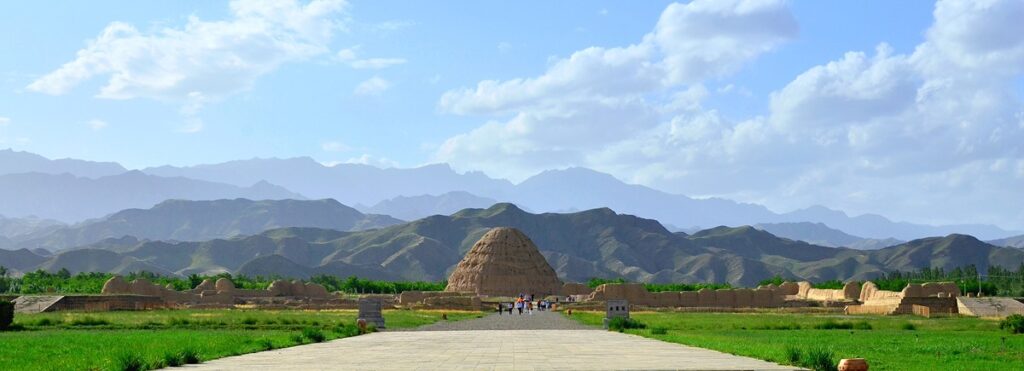
The Royal Mausoleum is located in the west of Yinchuan City, with Helan Mountain in the west and Yinchuan Plain in the east. It is one of the largest and most complete imperial cemeteries in China. To be honest, from a distance, the tombs of the Western Xia Kings do look like small mounds in the Gobi Desert, unremarkable. Who would have thought that the emperors of the Western Regions 10 centuries ago were buried here?
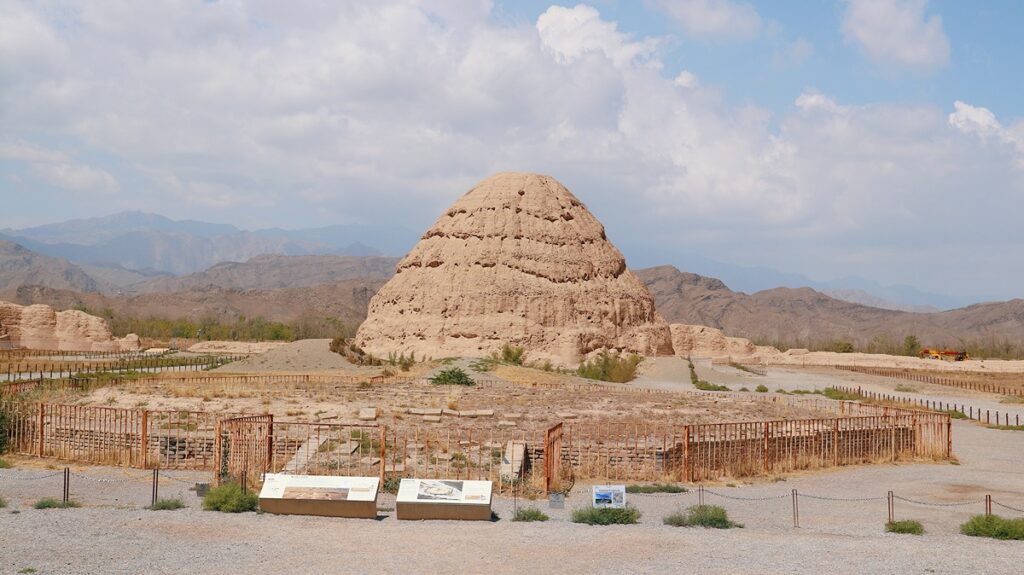 There are 9 imperial mausoleums and 253 accompanying tombs in the excavated site group, which is equivalent to the Ming Tombs in Beijing, and they are scattered on a land of 50 square kilometers. Strangely, from a high altitude view, the nine imperial mausoleums form a Big Dipper pattern, and even the accompanying tombs are arranged according to the astrological layout. Shuangling and Tailing are available for tourists to watch on the spot. The rest can only be viewed from a distance on the scenic tour guide car.
I got off the car at Tailing (Tomb No. 3), which is a very open land, and the pyramid-shaped mausoleum is particularly conspicuous. Go forward along the dirt road, pass through Quetai, Beiting and Yuecheng, and enter the inner city to find the dedicated hall, tomb passage and mausoleum. After thousands of years of baptism, the buildings in these historical documents have long been turned into sand and loess, leaving only incomplete rammed earth foundations and a few wooden piles to prove their former glory. Perhaps this is the reason why there are few tourists in Wangling. After all, many people probably think that those are just broken walls, so what is there to see?
However, this is exactly what attracts me: no matter how many times I have seen it in books, movies, or museums, only when I set foot on this land will the intuitive experience of history emerge, and the city walls imprinted in my mind Only then did it really gain temperature and become three-dimensional.
In addition to the Xixia Royal Mausoleum, there is another relic with a longer history at the eastern foot of Helan Mountain – the rock paintings of Helan Mountain. It records the life scenes of grazing, hunting, and sacrifices of ancient humans from 10,000 years ago to 3,000 years ago, and also covers a large number of animals and abstract totems, among which the rock paintings of Helankou are more representative.
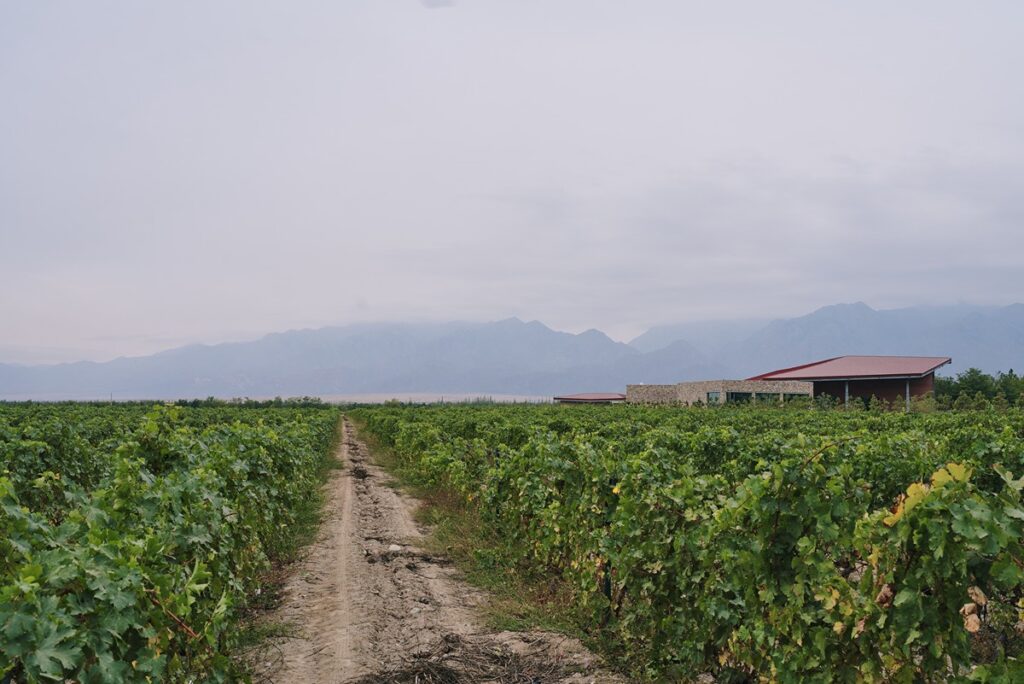 On the way to Helankou by car, you will pass through a large area of vineyards. The eastern foot of Helan Mountain has less precipitation, sufficient sunlight, and rich mineral elements. The unique terroir makes it one of the most suitable places for growing wine grapes at home and abroad. Almost all Chinese wineries that are internationally famous come from this area. district. As a wine lover, although I can't taste it because of driving, I can't help but turn to the winery that has already been marked on the map to take a look and look forward to the plum to quench my thirst. Over the past few years, domestic wine tourism has gradually developed, and several independent wineries at the eastern foot of Helan Mountain have quite good accommodation conditions. If you have enough time, you might as well stay in the winery for one night, and taste the flavor of the desert with the majestic Helan Mountains. If you drive alone, you can only give up your appetite and go straight to Helankou.
When I saw the rock painting scenic spot for the first time, I whispered in my heart: "Isn't this just an ordinary low hill?" The further I went, the narrower the road became. About ten minutes later, the tour bus put us at the mouth of a slender canyon, and the rest of the road could only rely on our legs, and the petroglyphs were hidden in this valley. The "rock paintings" of Helan Mountain are precisely rock carvings, most of which were carved by ethnic minorities in the north during the Spring and Autumn and Warring States Periods.
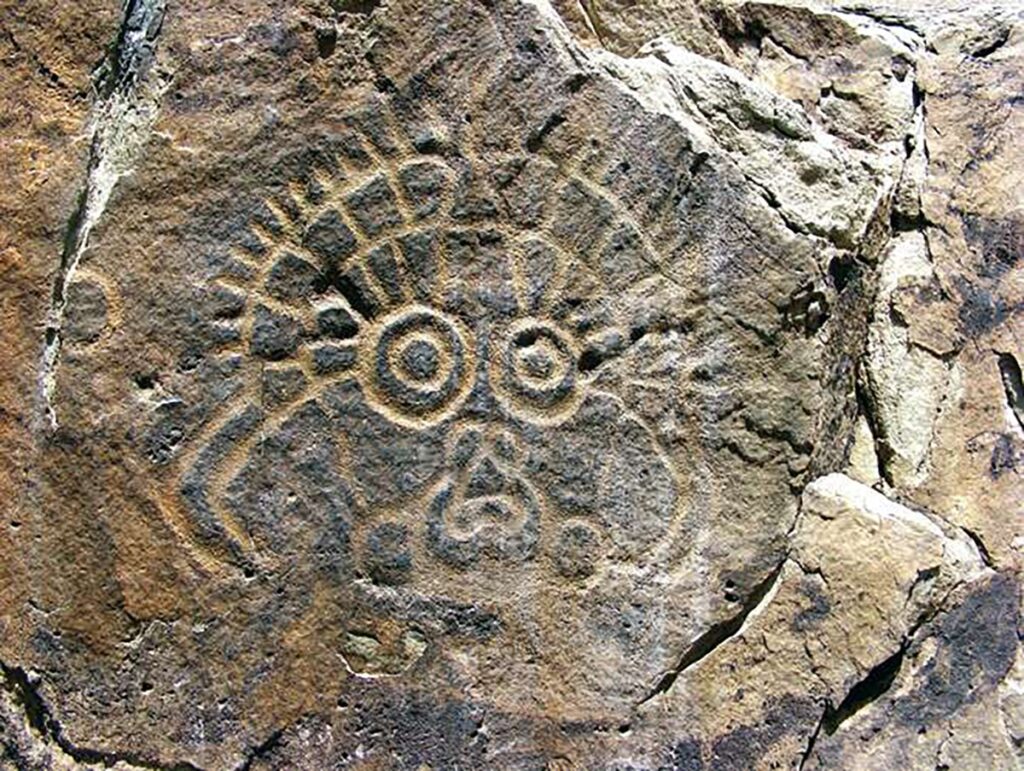 Walking along the canyon, you can see a pair of petroglyphs every few meters, some are carved on the cliffs, some are hidden on the stones on the side of the road, some are covered by vegetation, and some need to climb to a high place to see. These ancient art shapes are also quite rich, mainly including portraits, the sun, the moon and some ambiguous animal figures of cattle and horses. The sizes are different and the lines are rough, which looks a bit like children's drawings. Among them, the "Sun God" pattern is the most representative. It is engraved on the stone wall tens of meters above the ground. It looks like a human face with glasses in the middle. There are radioactive lines on the head. The "Sun God" in
Most of the petroglyphs are not marked, and you can find them with your eyes, which adds a bit of fun. Strange friends next to them find a certain place and share it with each other loudly, like playing a treasure hunt. It is said that there are more than a thousand such petroglyphs on the rock walls of more than 600 meters on both sides of the valley. I wonder if anyone has seen the whole picture?
To travel to such a place, I will definitely pick a corner where there is no one, sit on the rock, close my eyes, let myself go, listen to the insects and birds in the valley, feel the flow of the surrounding air, and quietly Quietly go back to the human beings who lived here thousands of years ago, what kind of mood they used to carve these totems full of primitive power and beauty.
We go back to the long river of human history in this way, not only to understand where we came from, but also to know how to live on this planet.
From Xixia royal tombs, Helan Mountain petroglyphs to wineries, night market delicacies … Here, history, culture and natural geography are organically combined. I think you should come to Yinchuan to see this underrated desert town.