
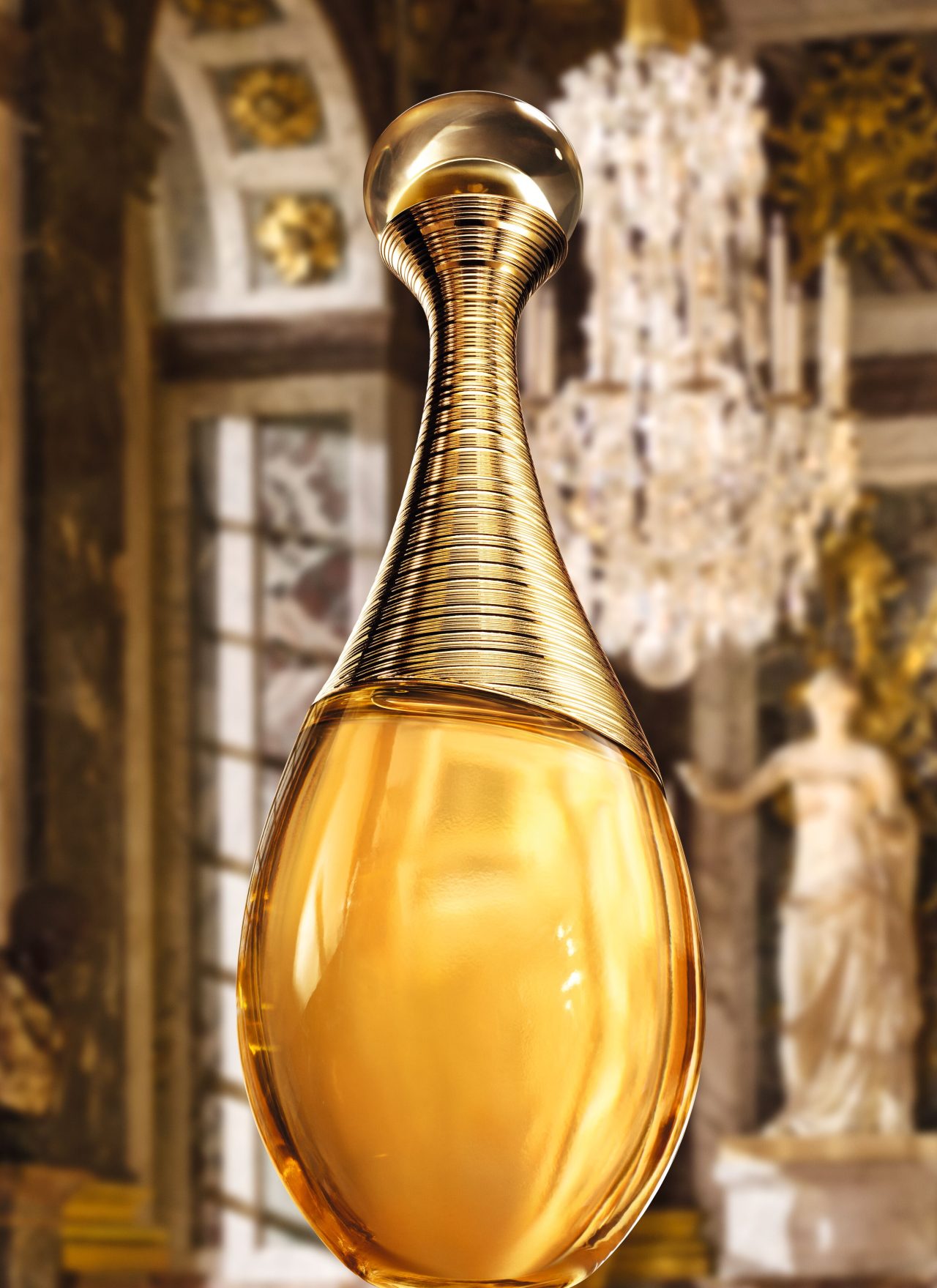
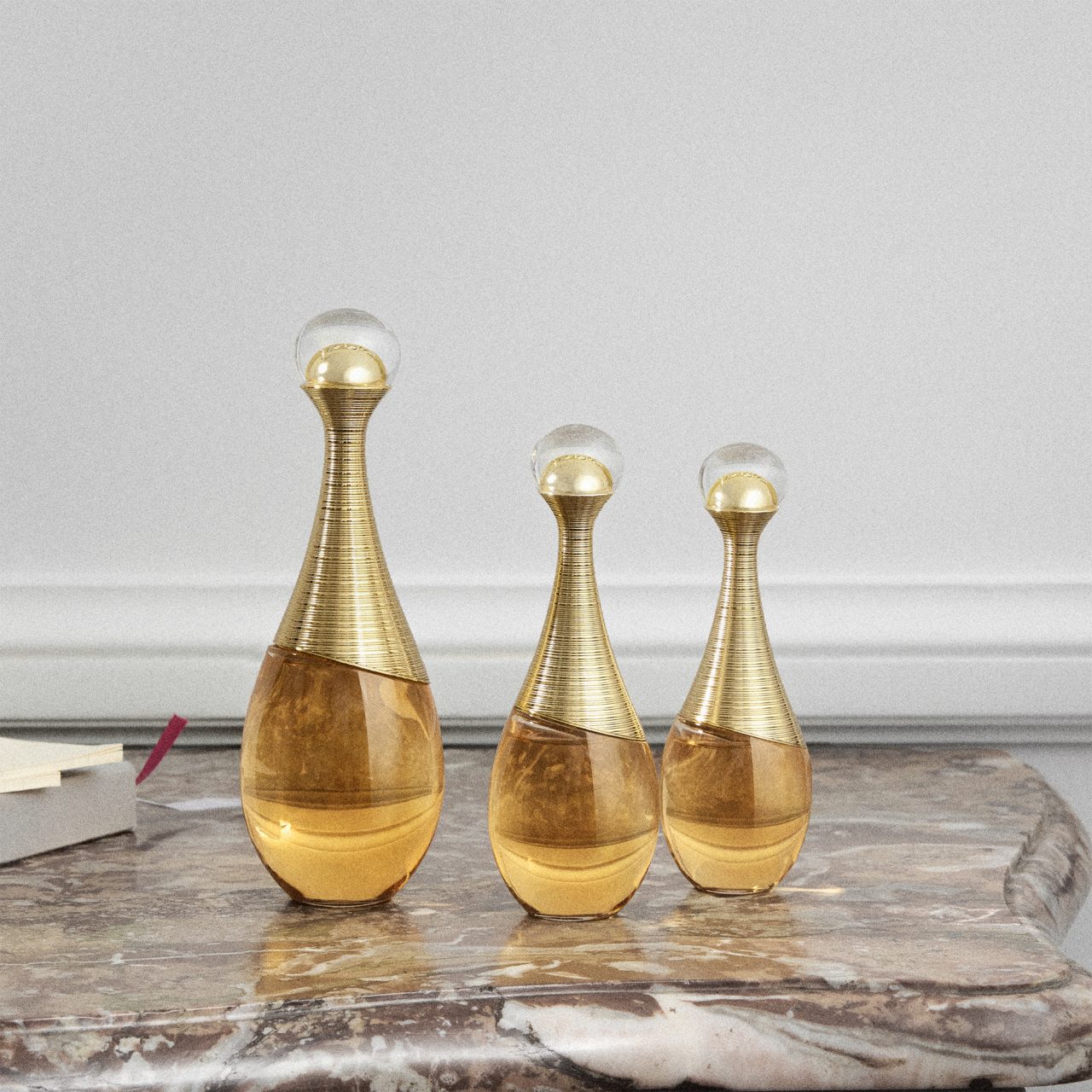
This year, Dior launched a new design for its classic fragrance J'adore Intense. At first glance, it doesn't seem to have changed much, but what's truly captivating is that it didn't rush to completely overhaul the classic design. The classic double-eared bottle silhouette, the slender lines, the upward-tapering neck, and even the gold choker that wraps around like jewelry have all been retained. So at first glance, it's still the J'adore we all know and love.
However, upon closer inspection, you'll find that it's become lighter and more streamlined overall, losing the somewhat heavy feel of the past and gaining a fresher and lighter quality that modern women would appreciate. The bottle uses thinner glass technology, reducing the amount of glass used, which in turn reduces carbon emissions and water consumption, giving this classic design, which has been used for many years, a new meaning that is more relevant to modern lifestyles.
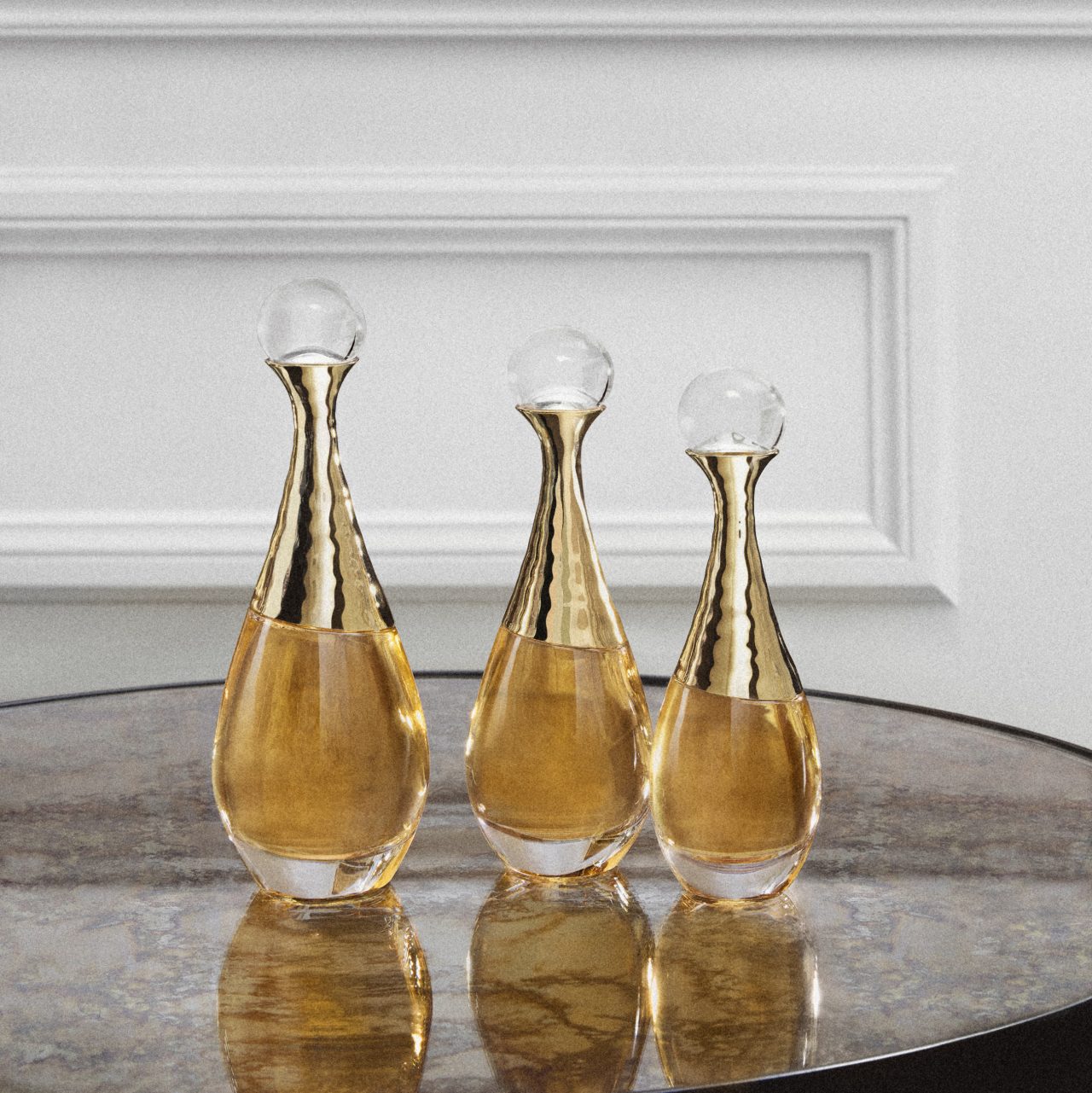
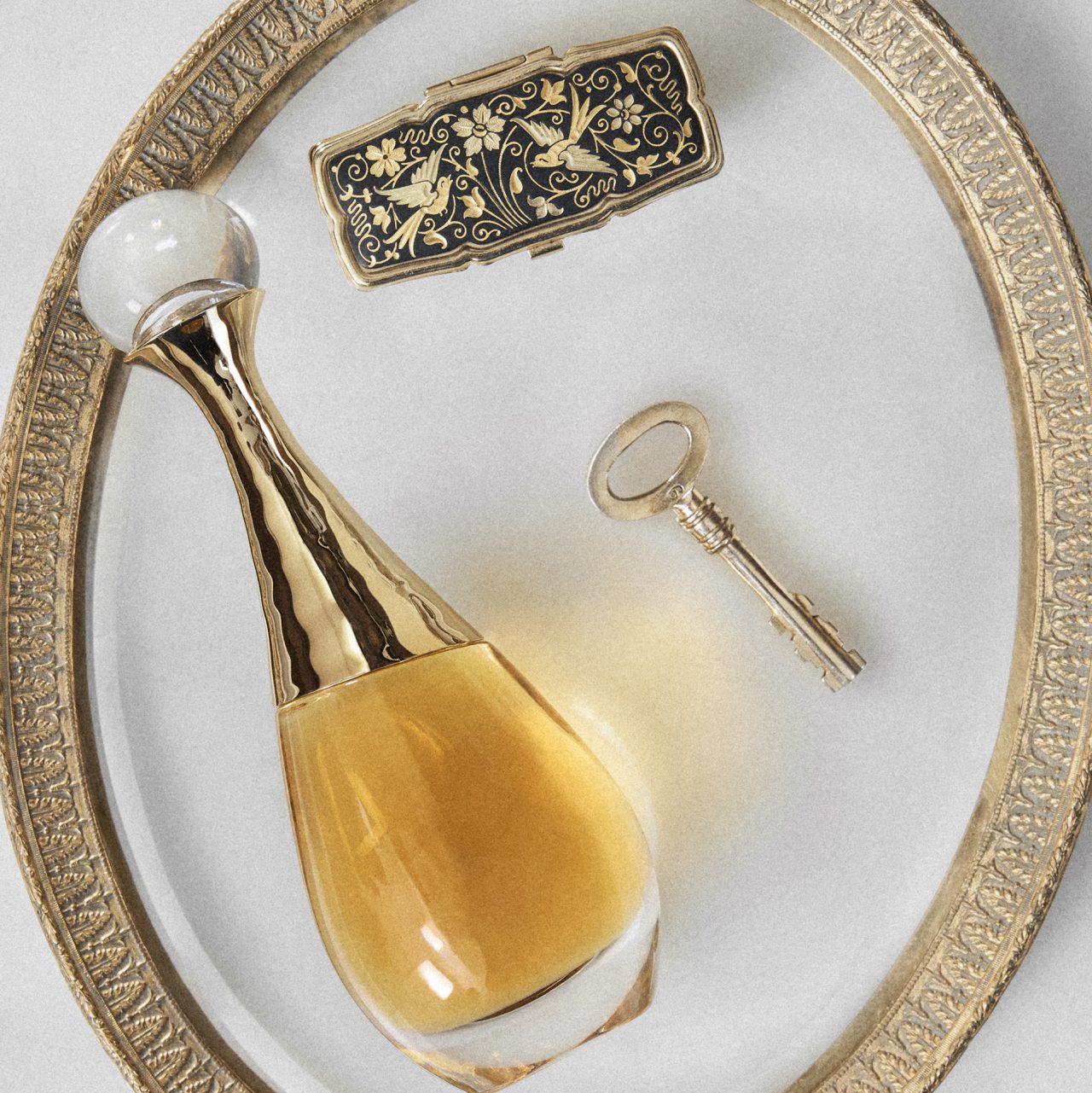
The story from the name to the classic bottle design
However, if we go back to 1999, it was an era when aesthetics were turning cool. The fashion and fragrance worlds were obsessed with minimalist, neutral, and almost expressionless beauty. Black, white, and gray became the mainstream, and even perfumes were trending for clean, rational, and aloof scents. It was at that time that Dior launched J'adore, with its golden bottle resembling a shimmering jewel, bringing a golden light to the world's eyes.
At the time, the brand needed a piece that could truly represent the new era, and John Galliano, who had just taken over Dior in 1996, injected unprecedented energy into the entire brand. He was fascinated by opulence, a sense of history, exoticism, and theatrical extravagance, leading Dior back from elegance to a more glamorous, flamboyant, and imaginative direction. It's said that Galliano didn't speak much French back then, but the phrase he most often uttered was "J'adore." However, now when people mention "J'adore," the first thing that comes to mind is probably the classic J'adore amphorae design. Its curves are inspired by Dior's iconic New Look "En 8" lines, soft and undulating like a woman's body, carrying a feeling of almost being a work of art. This issue of *Supreme* magazine has the privilege of interviewing Hervé Van der Straeten, who was responsible for the bottle design 25 years ago, to share with readers the origin and design process of the J'adore amphorae.
"To": Who was the first person at Dior to invite you to participate in the new women's fragrance project?
H: It was Marie-Christine de Sayn Wittgenstein, the creative director of Dior fragrances, who contacted me in 1996. After seeing my work in the media, she was fascinated by my innovative and powerful creations and hoped to collaborate with a designer from outside the beauty industry. So we met for the first time at 33 Boulevard Hoche in Paris. She herself was the embodiment of Parisian style—natural, tasteful, and with a voice as soft as velvet. I was immediately drawn to her.
Madame de Sayn Wittgenstein felt my work was perfectly suited to the world of Dior, so she suggested I design a limited-edition set of bottles for four of the brand's key fragrances: Dune, Dolce Vita, Poison, and Tendre Poison. Each bottle featured a similar shape, with a different color corresponding to the scent. The bottle was designed as an amphorae with flowing, meandering lines, as if in motion. I was also invited to participate in the design of the display box and other creations; the whole process felt a bit like working in a laboratory. Later, Madame de Sayn Wittgenstein also mentioned a brand new fragrance project, which later became J'adore, though it didn't have a name at the time.
To: When you joined the project, what creative directions were being explored internally at Dior? Did you feel any hesitation or conflict?
H: I had complete creative freedom, and luckily, I didn't need to be involved in too much behind-the-scenes work. The bottle's creation roughly went through three main stages: the overall outline, the gold elements, and the placement of the name and logo. Each step was innovative and broke with existing conventions at the time. Dior explored many ideas and raised a lot of questions and considerations, which is natural for a project of this scale. What I found interesting was being able to incorporate everyone's different perspectives throughout the process.
To: How do you define a classic, timeless bottle design? Do you think the J'adore bottle, designed in 1999, possesses this quality?
H: For a bottle to be considered a classic, it must first evoke a sense of awe and emotion; more importantly, it cannot follow any current trend. J'adore's bottle design makes it impossible to tell whether it comes from antiquity or a science fiction movie. It is precisely this ambiguity that gives it its classic quality. At the time, there were many Baroque or geometrically designed bottles on the market, but J'adore was the complete opposite. It presented an extremely simple design that was both futuristic and deeply rooted in history.
To: Did you explore other design directions for the bottle cap at that time?
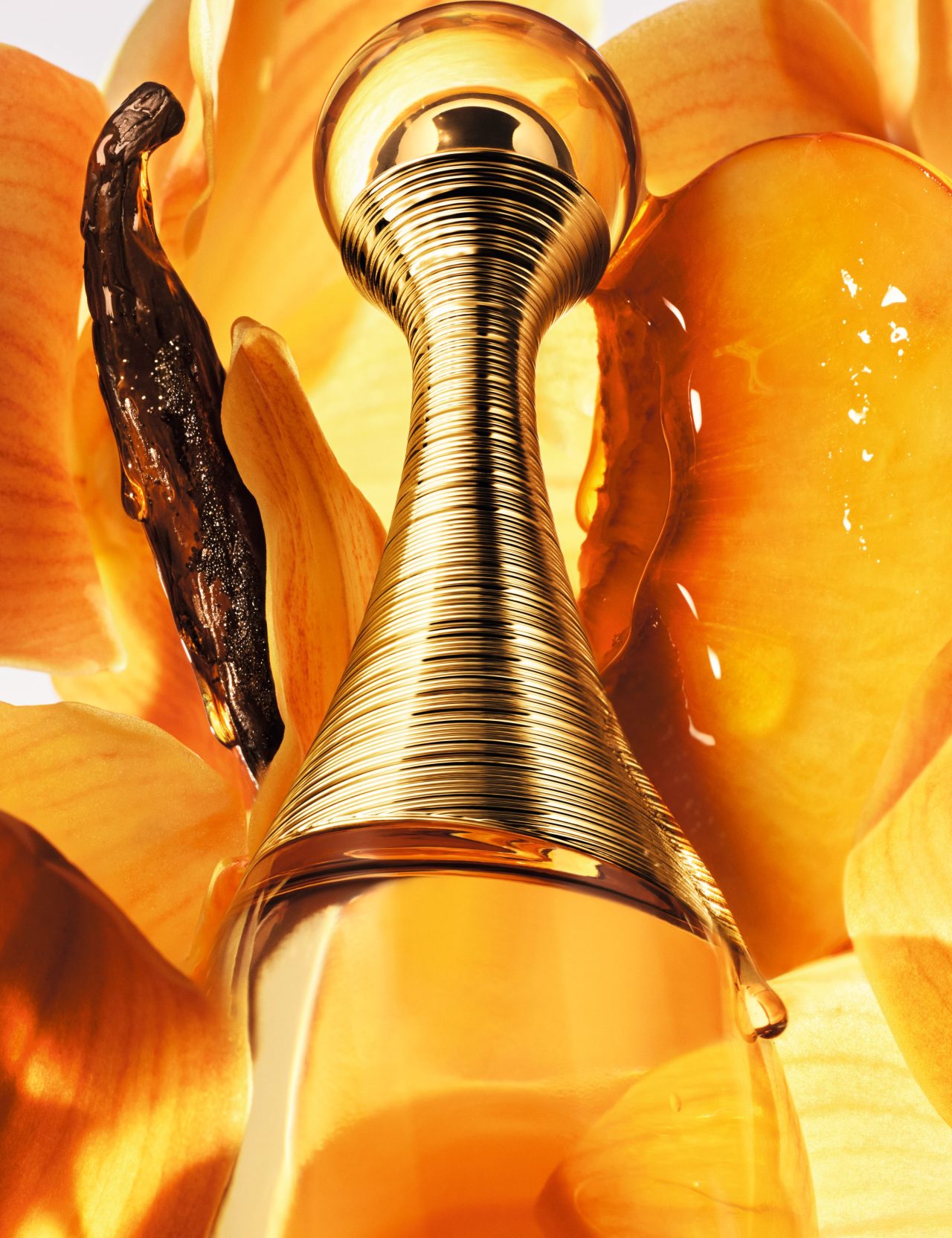
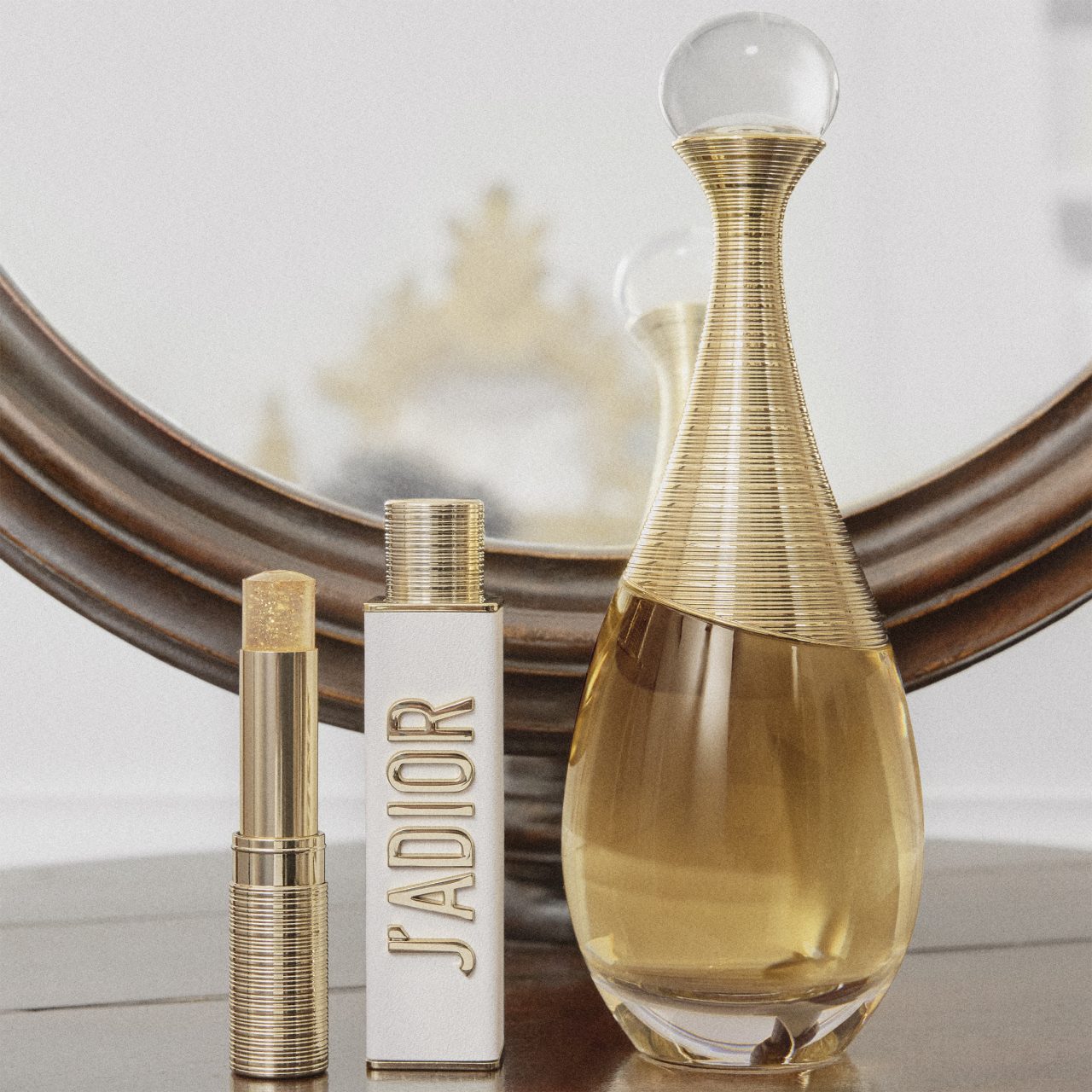
H: Once the overall outline was finalized, we started thinking about how to handle the bottle cap. This led to various versions and prototypes. All the bronze elements were made in my studio. There were lace versions, grooved versions, smooth versions, and different designs with ribbons, stars, the Dior logo, rose petals, and more. Ultimately, the version with the delicate grooved finish won out because it was both precious and understated, yet had a strong presence. The whole equation was thus established, and the object acquired its own logic and magic.
To: What was the biggest challenge you encountered during the design process, especially in arranging the name on the bottle?
H: The biggest challenge was preserving the soul of the bottle without altering its essence. I wanted it to be like a precious object, almost like a personal item a woman could keep, something that wouldn't be discarded like a typical bottle once the perfume is used up. But in those days, brands usually preferred to prominently display the perfume name on the bottle. At J'adore, we tried many methods, but none were satisfactory, because once the name and logo were too conspicuous, the bottle's magic and elegance were ruined. Whether it was placing the name on the metal part, gilding, or embossing, none of them quite felt right.
Later, I came up with an idea: to hide it inside the bottle cap, like a stamp. This way, the bottle regained its personal status, allowing women to truly embrace J'adore as their own bottle. For me, this was the boldest part of the entire design because it defied all conventions at the time. Who would dare launch a perfume with their name and logo hidden? I believe this played a significant role in how the bottle and the overall scent were perceived. J'adore has been remarkably recognizable from the start, powerful, almost like a work of art, and remains distinctly different from other perfume bottles to this day.
To: Was the gold element itself a challenge? What kind of gold did you recommend using at the time? Was gold a popular trend then?
H: I don't follow trends when I work, nor do I deliberately oppose them. I've always preferred a matte finish to a ostentatious, polished metal. Besides, a matte finish makes the glass of the J'adore bottle look stunning. My creative process is always driven by my beliefs, which shape my work every day. For J'adore, I've always preferred a 24K gold matte finish. I didn't want a too bright gold, because the bottle itself already has a strong presence. And the teardrop shape already has a sheen, so the neck needs to be softer and more understated.

Perfumer Francis Kurkdjian reimagines J'adore
Despite its name, J'adore Intense doesn't lean towards being overly sweet or cloying. Ylang-ylang enhances the floral scent, while the smooth, frankincense-like lactone adds a creamy, skin-soothing texture. The base notes are finished with delicate sandalwood, leaving a warm, clean, and slightly sensual aftertaste. It smells a bit like skin after applying lotion following a shower; it's not too overpowering for everyday wear, but naturally adds a touch of allure in the evening. The magazine *Supreme* also invited Francis Kurkdjian, the master perfumer responsible for J'adore Intense, to discuss the inspiration and ideas behind the creation of this new fragrance.
To: So what kind of feeling do you hope the new J'adore floral fragrance will present this time?
F: I wanted to express a very specific kind of feminine charm—confident, radiant, and abundant. J'adore Intense is bright and fruity, but overall warm. I wanted J'adore to smell more curvaceous, more rounded, and to have a fuller, more sensual presence.
To: Is your creative method this time the same as usual?
F: Pretty much. I usually need to have an imagined scene, or a story, before I can slowly find the corresponding fragrance structure. J'adore Intense started in the same way. This time, the starting point was that I wanted to find a very smooth, sensually appealing quality. Rather than telling a story, it's more about depicting the silhouette and charm of a woman.
To: You used to say that you wouldn't be inspired by any particular woman, why did you change your mind this time? Is Rihanna one of your sources of inspiration?
F: Because Rihanna's image really resonated with me. Her photos at Versailles had a huge impact on me. That feeling was very different from J'adore's previous image. Back then, I wanted to portray a freer, more curvaceous, more feminine, and more confident image. So, the J'adore Intense in my mind is a woman with a defined waist, full posture, and head held high.
Rihanna is an incredibly inspiring person. She has many layers and represents many things, yet she doesn't need to make any special pronouncements; she is simply herself. What interests me is how to create a J'adore that can connect with the era of Charlize Theron while simultaneously ushering in a new feeling. Charlize is like a flawless, almost mythical goddess, while Rihanna is more like a pop superstar standing center stage, directly engaging with people. She is bold and authentic, and that's what moves me most.
To: How do you incorporate a warm and bright sensuality into your fragrance?
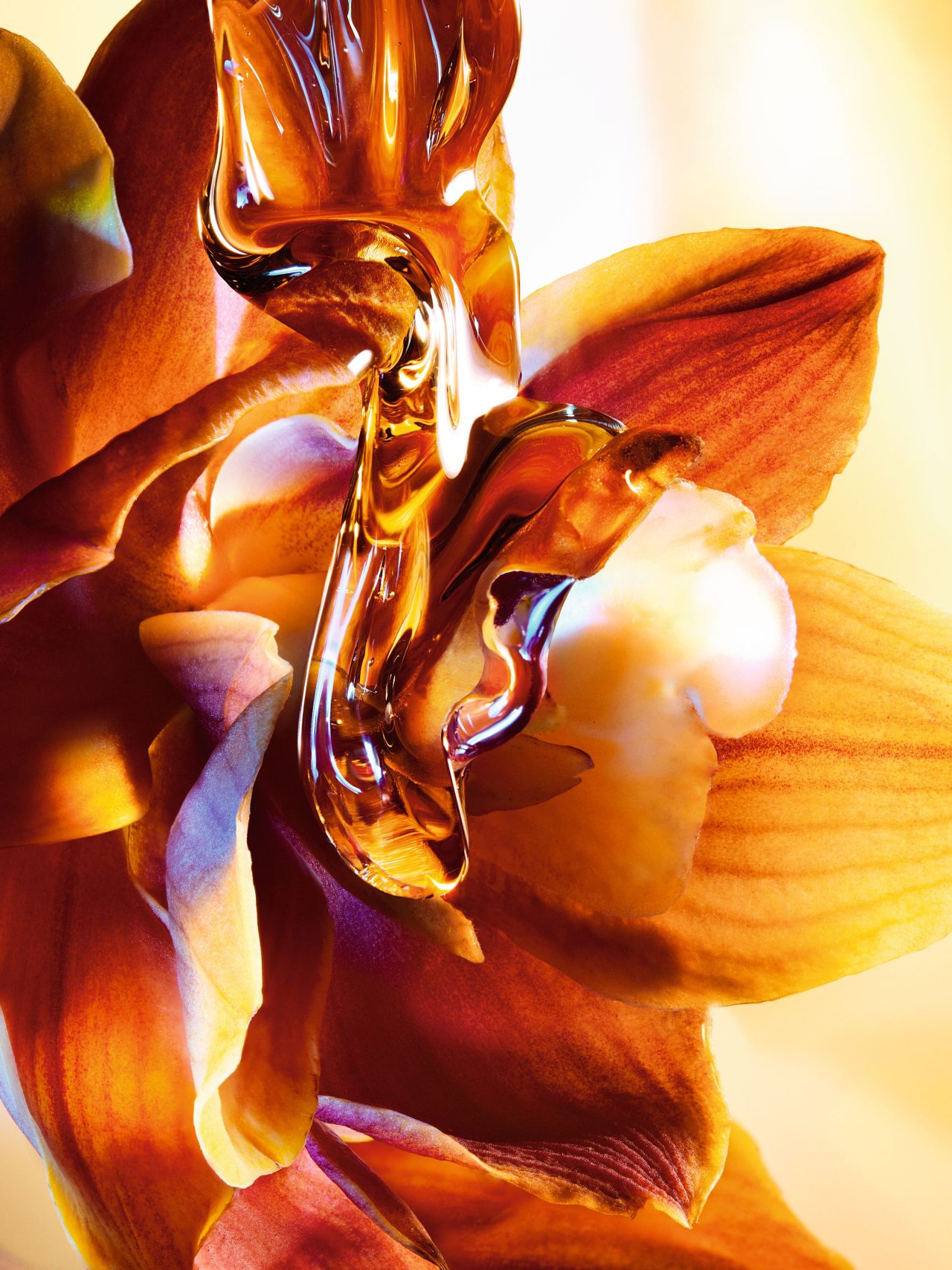
F: I wanted this fragrance to smell like it melts onto the skin, like a layer of honey-like nectar slowly enveloping it. I had a concept in mind called "peak floral," which is to push J'adore's floral scents to their fullest, most sensual state. In terms of technique, I reworked the inherent fruitiness and sweetness of the flowers, making them more pronounced and giving them a feeling of being warmed by the sun. Then I brought the concentration and base notes to an even more ideal state, making the overall scent more present and longer-lasting.
"To": Which incense materials did you particularly focus on this time?
F: I mainly made changes to J'adore's original signature floral scents, bringing out their warmer, fruitier aspects. For example, I added a touch of orange fruitiness, like ripe apricot, to the jasmine. The rose became softer, somewhat like velvet, with a sweet, honey-like feel. The ylang-ylang is quite prominent at first, but it gradually transitions into a more modern fruity scent. I also added some lactone to make the overall scent smoother and more enveloping, along with a hint of tuberose and violet.
"To": Many people worry that the fragrance is too sweet or too strong when they hear "intense" or "gourmand". Will it be this time?
F: No. I don't want it to become a heavy, cloyingly sweet perfume. While J'adore Intense is enveloping and quite rich, it's still bright and approachable. The sandalwood base is soft with a subtle milky quality, avoiding a dry, hard woody or overly sweet tone. Even the vanilla is restrained. The overall focus is on balance—soft, attractive, yet retaining the essential floral character.
"To": What is the most special feature of this new Intense compared to other J'adore versions?
F: Eau de Parfum has always been the core version of the entire series and has become a classic. It represents a very clean and distinct floral scent. L'or de J'adore is a version that amplifies the bouquet itself and pushes it to an even higher level. With J'adore Intense, I want to talk about the current era's desire for sensory pleasure, so it is warmer and more seductive. It is J'adore that belongs to this era, and it is also a version that is willing to take risks and change.
The post "Golden Threads, Fragrant Soul" first appeared on Pure Luxury Magazine .
This year, Dior launched a new design for its classic fragrance J'adore Intense. At first glance, it seems largely unchanged, but what's truly captivating is precisely its restraint in not hastily revamping the classic. The iconic double-eared bottle silhouette, slender lines, and upward-tapering neck, even the gold choker that wraps around like jewelry, are all retained. So, at first glance, it's still the J'adore we all know and love. However, upon closer inspection, you'll find that it's lighter and more streamlined overall, losing the previous heaviness and gaining a fresher, lighter feel that modern women would appreciate. The bottle uses thinner glass technology, reducing the amount of glass used, which in turn lowers carbon emissions and water consumption, giving this classic design, used for many years, a meaning that resonates more with contemporary lifestyles. The Story from the Name to the Classic Bottle But if we go back to 1999, it was an era of cool aesthetics. The fashion and fragrance world were obsessed with minimalist, neutral, and almost expressionless beauty. Black, white, and gray became mainstream, and even perfumes favored clean, rational, and aloof scents. But then Dior launched J'adore, its golden bottle resembling a shimmering jewel, bringing a golden glow to the world.
The post "Golden Threads, Fragrant Soul" first appeared on Pure Luxury Magazine .
")%]
This year, Dior launched a new design for its classic fragrance J'adore Intense. At first glance, it seems largely unchanged, but what's truly captivating is its restraint in not hastily revamping the classic. The iconic double-eared bottle silhouette, slender lines, and upward-tapering neck, even the gold choker that wraps around like jewelry, are all retained. So, at first glance, it's still the J'adore we all know and love. However, upon closer inspection, you'll find that it's lighter and more streamlined overall, losing the previous heaviness and gaining a fresher, lighter feel that modern women would appreciate. The bottle uses thinner glass technology, reducing the amount of glass used and consequently lowering carbon emissions and water consumption, giving this classic design, used for many years, a new meaning that resonates more with modern lifestyles. The Story from Name to Classic Bottle: But if we go back to 1999, it was an era of cool aesthetics. The fashion and fragrance worlds were obsessed with minimalist, neutral, and almost expressionless beauty. Black, white, and gray became mainstream, and even perfumes favored clean, rational, and aloof scents. Yet, Dior launched J'adore at that time. Its golden bottle, like a shimmering jewel, brought a golden light to the world. … The post Golden Threads, Fragrant Soul…
