
In Toronto, a city with a rich multicultural heritage, there is a new restaurant with a unique Asian flavor, aKin. Every dish here is presented in a modern and sophisticated way while perfectly retaining the soul of oriental cuisine. The restaurant was founded by two culinary masters with very different styles but a mutual respect for each other, Eric Chong and Alvin Leung, who is known as the "Devil of the Kitchen".

Chef Eric Chong
Master and apprentice work together to create new Asian flavors
Zhang Huacong is the champion of the first season of "MasterChef Canada". He used to be an ordinary engineer. After participating in "MasterChef", he not only won the championship with his keen taste and innovative dishes, but also attracted the attention of one of the judges, Liang Jinglun. Born in Hong Kong, King Lun Leung is a chef with three Michelin stars. With his wild creativity and deep understanding of Asian flavors, he has created countless dishes that subvert tradition. Under the guidance of Liang Jinglun, Zhang Huacong transformed from an amateur to a professional chef. The master and apprentice decided to work together again to create a restaurant that could reflect the diversity of Asian food culture. Thus, aKin came into being, and became their new interpretation of the delicacies from Hong Kong, Malaysia, Singapore, Thailand and Japan.
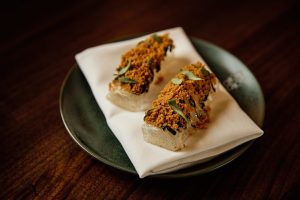
Transparent fried dough sticks transformed by molecular cuisine
From transparent fried dough sticks to hot pot capsules: a journey that subverts taste buds
aKin restaurant's 10-course tasting menu is not only a fusion of flavors, but also an experiment in culinary innovation. The chef skillfully reinterprets traditional eating methods, giving new life to classic dishes and presenting familiar flavors on the table in unexpected forms. Like the "Clear Youtiao" on the menu, youtiao was originally a typical oriental breakfast delicacy, well-known for its simple combination of crispy youtiao and clear soup. However, in aKin's version, the chef uses modern technology to refine the clear soup to a transparent state, and pairs it with the porridge puree, fermented olive leaf garlic puree and sprinkled with pork powder, retaining the original rich umami flavor and changing the fried dough sticks to a lighter and more delicate bite, which not only retains the soul of Chinese snacks, but also demonstrates the exquisite techniques of molecular cuisine.
Another example is the classic Japanese dish, chawanmushi, which is usually served with smooth steamed eggs and simple soy sauce and shiitake mushrooms. The chef adds geoduck and Hokkaido sea urchin to the steamed egg, and garnishes it with pickled plums and apples, sublimating the light layers of Japanese style into a rich contrast, with both the deliciousness of the ocean and a touch of fruity freshness. The reinterpretation of the pineapple bun perfectly combines tradition and modernity. Pineapple buns were originally a classic snack in Hong Kong tea restaurants, consisting of soft bread and crispy sugar crust. At aKin, this dessert uses French butter bread, the filling is changed to salted egg yolk butter, and it is served with a touch of sea salt, perfectly presenting the contrast between sweet and salty.
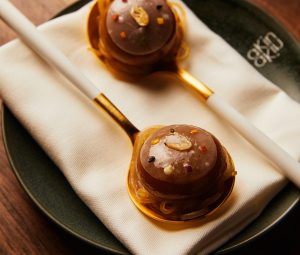
Another creative dish is called "Hot Pot". The chef transforms the rich spicy hot pot soup base into a plump capsule, which is filled with Iberian pork, konjac and bacon fat. Every bite is the soul of hot pot. The spicy, delicious and rich layers instantly bloom on the tip of the tongue, just like the "concentrated essence version" of hot pot, bringing a surprising enjoyment. The Malaysian-inspired dish "laksa" uses lobster from Nova Scotia, Canada, paired with silver needle vermicelli noodles, and is seasoned with a coconut-flavored laksa soup base and tamarind. Another dish, “chicken mille-feuille”, reinterprets the poached chicken using molecular cooking techniques. The lightness of the chicken mousse contrasts with the richness of the ginger and scallion sauce, and the rich layers are unforgettable.
"Anatomy of a Fish" perfectly illustrates the chef's respect and deconstruction of fish ingredients. The whole dish is served on an exquisite metal fish bone plate, turning various parts of the fish into a series of exquisite pieces: such as fish liver, fish roe, fish bones, fish skin, etc. Each part shows a different flavor and taste, turning the dish into a work of art. The dish includes smooth and delicate monkfish liver, paired with Japanese-style yellowtail (Hiramasa) and rich Mentaiko (Mentaiko), as well as crispy fish bones and fried fish skin, adding a multi-layered taste to the whole. Every bite is like exploring the inner structure of the fish, with delicious layers of texture and the unique flavors of different parts of the fish highlighted.

Persistence from source to table
The concept of aKin restaurant is deeply rooted in the pursuit of food quality and respect for cultural roots. Chef Zhang Huacong admits that although ideally all ingredients could come from Canada or be supplied locally, in some cases this goal is not realistic. For example, A5 Wagyu is a signature ingredient for high-end cuisine, but there is currently no A5-grade Wagyu available in Canada, so aKin chose to import the highest quality A5 Wagyu from Miyazaki Prefecture, Japan. Likewise, sea urchin from Hokkaido is included on the restaurant’s menu for its sweet and rich flavor. But this does not mean that aKin is completely dependent on imports. The restaurant actively utilizes local resources, such as lobster from Nova Scotia, Peking duck from Fergus, Ontario, and fresh geoduck shipped from Vancouver.

In terms of food preservation, aKin also cans and pickles local ingredients such as corn and strawberries during their peak growing season to extend their use season and ensure that local flavors are present even during the non-production season. Zhang Huacong said: "Ultimately, my goal is to get the best ingredients, no matter where they come from." This insistence on quality is both a respect for food and a commitment to diners.
Finding emotional resonance in food
aKin’s 10-course tasting menu provides diners with a three-hour taste journey. For Zhang Huacong, this is not just a cultural display, but also an effort to establish an emotional connection with diners. His goal is to make each dish evoke memories and to elevate familiar flavors to new heights through innovation. For example, when he thinks of the traditional Chinese dish of congee, images that come to mind are warm rice porridge, crispy dough sticks and fermented olive leaves. aKin’s version cleverly deconstructs and reorganizes these elements: the protagonist is transparent dough sticks, filled with rice porridge puree, paired with fermented olive leaf garlic puree, and sprinkled with pork powder made from pork broth and potatoes cooked and dehydrated, and finally presented on a delicate plate.
This dish not only retains the soul of porridge, but also incorporates the sophistication and playfulness of modern cooking, presenting the emotional core of food in a more refined taste and form. For Zhang Huacong, every dish at aKin is not only a tribute to Asian classics, but also a hope that diners can find emotional resonance with food while tasting innovation.
